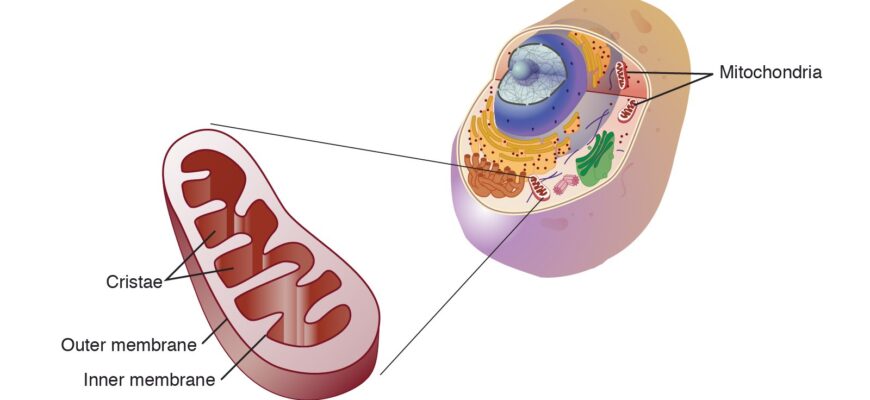
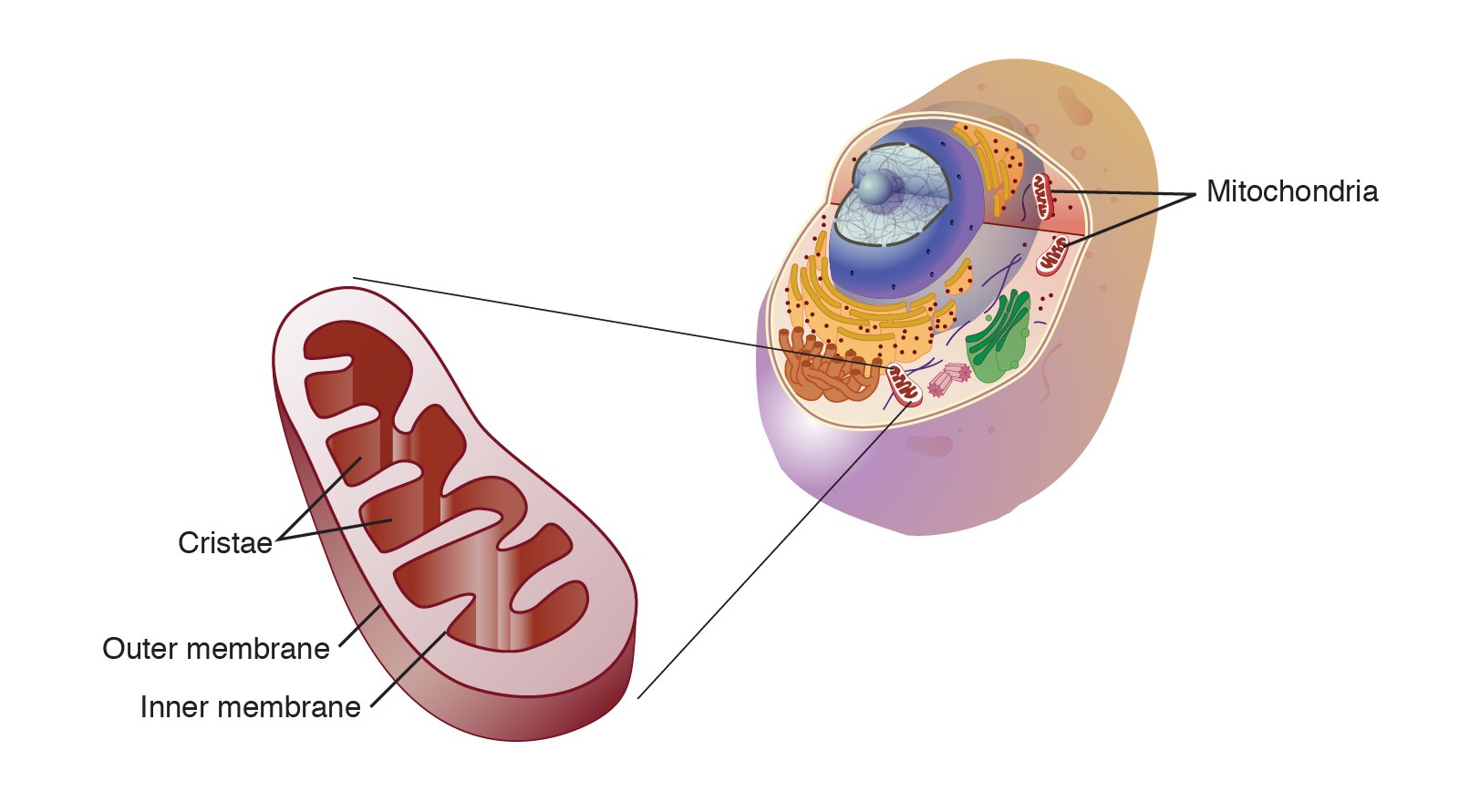
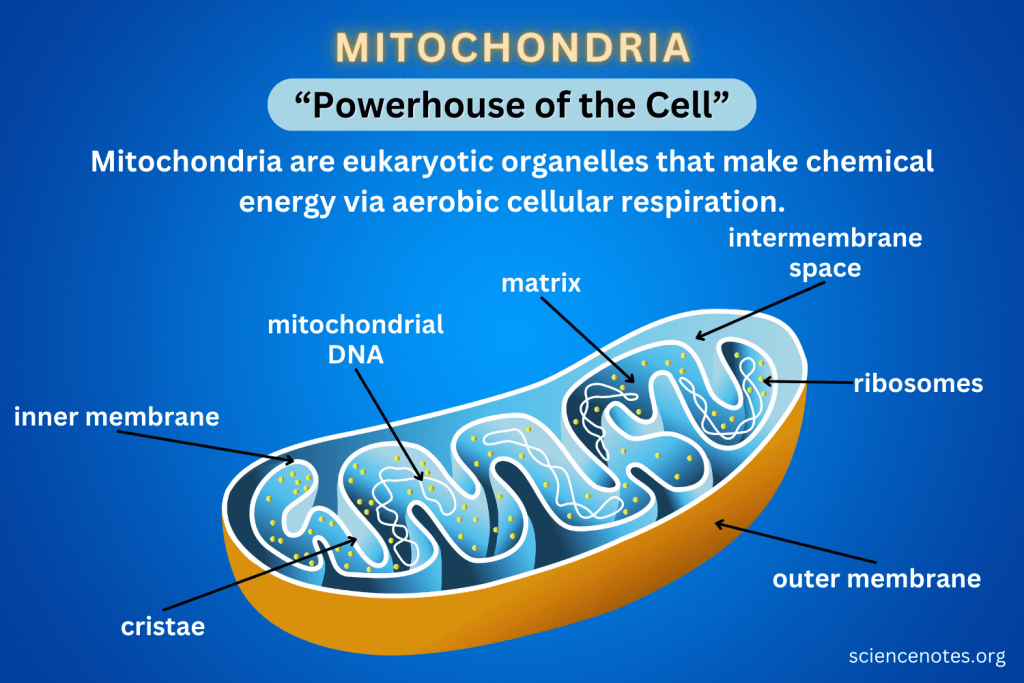
The mitochondrion produces most of the cell’s usable energy as ATP through cellular respiration. It is often called the powerhouse of the cell.
What mitochondria do
Mitochondria convert the energy from food into ATP, the molecule cells use as fuel. A single cell can have hundreds to thousands of them.
How they work
- Glycolysis occurs in the cytoplasm and produces a little ATP.
- The Krebs cycle runs in the mitochondrial matrix.
- The electron transport chain on the inner membrane makes most of the ATP, about 30 to 32 molecules per glucose in total.
Other functions
They help regulate calcium, produce heat, take part in programmed cell death (apoptosis), and make some steroid hormones.
Their own DNA

Mitochondria carry their own small circular DNA, which is inherited from the mother. This supports the endosymbiotic theory that they descend from ancient bacteria.
Health
Mitochondrial diseases affect organs with high energy needs like the brain, heart, and muscles.
Based on data from the National Institutes of Health and standard cell biology textbooks.