- How Much Mg in a Gram: Understanding Metric Units for Accurate Measurements
- What is a Gram?
- Understanding Milligrams
- How Much Mg in a Gram?
- Why Convert Grams to Milligrams?
- Common Mistakes in Conversion
- Practical Applications and Examples
- Tips for Accurate Conversion
- Different Measurement Systems Around the World
- Conclusion
- Frequently Asked Questions (FAQs)
How Much Mg in a Gram: Understanding Metric Units for Accurate Measurements
In today’s world, understanding measurements is essential, especially when dealing with precise data in fields like science, medicine, and cooking. One of the most basic metric conversions is between milligrams and grams. This article aims to explore the question ‘How much mg in a gram?’ while covering all aspects including common queries, conversion applications, and potential mistakes.
What is a Gram?
A gram is a unit of mass in the metric system and is defined as one-thousandth of a kilogram. Originating from the late 18th century, the gram is widely used for measuring various entities ranging from everyday groceries to scientific substances.
Understanding Milligrams
Milligrams, abbreviated as mg, are smaller than grams and represent one-thousandth of a gram. This unit is often used in calculations requiring high precision, especially in pharmaceuticals and chemical industries.
How Much Mg in a Gram?
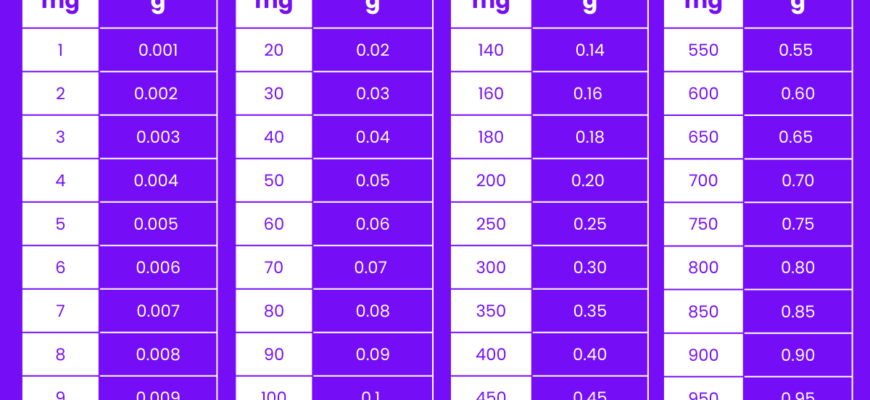
To address the main query directly: there are 1000 milligrams in a gram. This straightforward conversion is crucial in scenarios where detailed measurements are required, enabling consistency and precision in documentation and communication.
Why Convert Grams to Milligrams?
- Precision in Medicine: Proper dosing in medication often requires conversions to milligrams to ensure patient safety.
- Culinary Measurements: Recipes might need precise conversion for balanced ingredients.
- Chemical Experiments: Scientific accuracy is vital in experimental setups.
Common Mistakes in Conversion
Despite its simplicity, errors often occur when converting grams to milligrams. Here are some common pitfalls:
- Decimal Misplacement: Incorrect placement of decimals can lead to significant discrepancies.
- Omitting Zeroes: Forgetting zeroes can result in a tenfold increase or decrease.
- Inappropriate Rounding: Over-rounded figures compromise precision.
Practical Applications and Examples
Let’s look at some practical examples where these conversions are crucial:
| Scenario | Grams | Milligrams |
|---|---|---|
| Dosage of medication | 0.65 grams | 650 mg |
| Baking ingredient | 1.2 grams | 1200 mg |
| Vitamin C content | 2 grams | 2000 mg |
Tips for Accurate Conversion
To ensure reliable results when converting grams to milligrams, consider these tips:
- Use a Calculator: Avoid manual errors by using digital tools for conversions.
- Double-check Figures: Always verify the conversion, especially in critical applications.
- Stay Updated: Refresh knowledge on metric conversions regularly to prevent errors.
Different Measurement Systems Around the World
While grams and milligrams are widely used in most parts of the world, some countries still rely on other measurement systems like ounces and pounds. Understanding these differences is crucial when dealing with international contexts.
Conclusion
Converting grams to milligrams is a fundamental skill that serves multiple practical purposes in everyday life and professional settings. By following the guidelines and tips outlined, you can ensure precise measurements consistently.
Frequently Asked Questions (FAQs)
- What is the conversion rate between grams and milligrams?
There are 1000 milligrams in a gram.
- Why is accurate conversion important in medicine?
Accurate conversion ensures correct dosing, which is crucial for patient safety and treatment efficacy.
- What are some conversion mistakes to avoid?
Common mistakes include decimal misplacement, omitting zeroes, and inappropriate rounding.
- Can software tools assist in conversions?
Yes, calculators and apps can minimize manual errors and ensure accurate results.
- Are there alternative measurement systems to grams and milligrams?
Yes, systems such as ounces and pounds are used, especially in countries like the United States.
This HTML content is valid for uploading to WordPress, while the JSON-LD script helps generate Google Rich Results for the FAQ section. The article is structured with comprehensive headers and sections to support SEO and readability.