Percentage difference equals the absolute difference of the two numbers divided by their average, times 100.
Formula
Percentage difference = |A – B| / ((A + B) / 2) x 100.
Steps
- Subtract the two numbers and take the absolute value.
- Find their average.
- Divide the difference by the average.
- Multiply by 100.
Example
For 80 and 120: difference 40, average 100, so 40 / 100 x 100 = 40 percent.
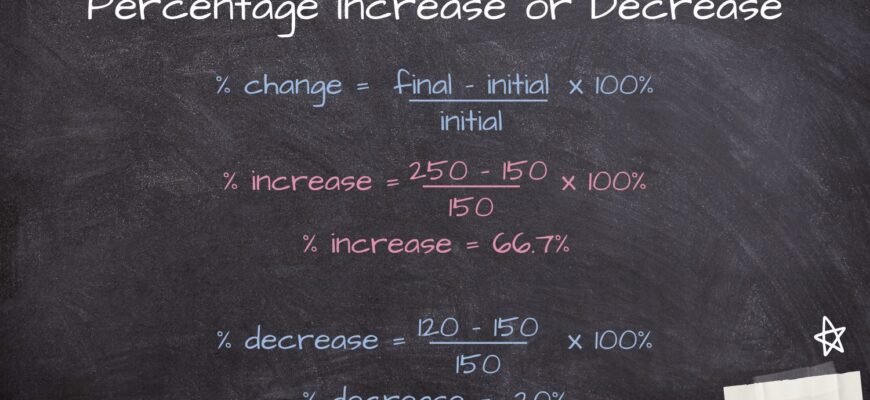
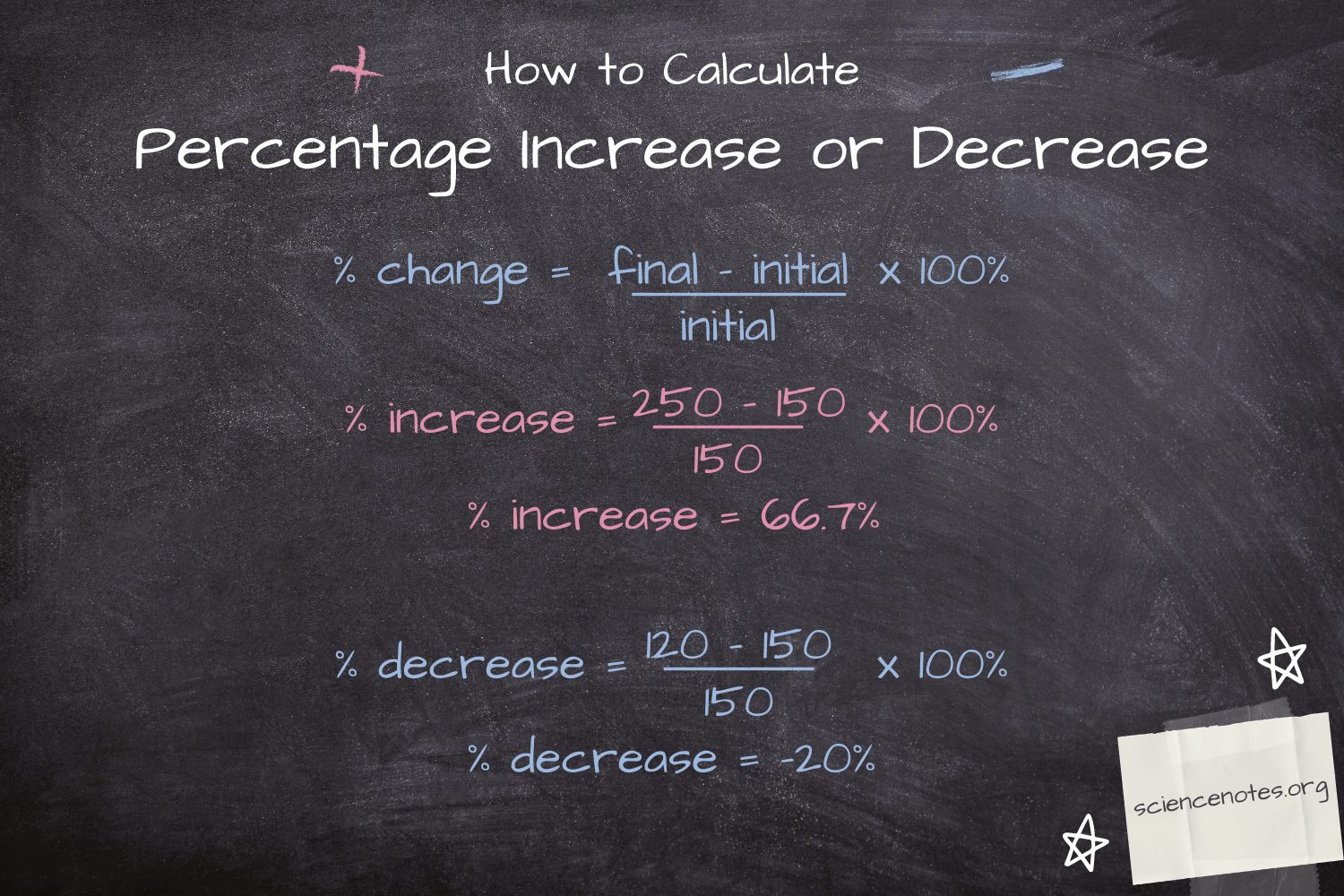
Percentage change

If one number is the starting value, use (new – old) / old x 100. From 80 to 120 that is 50 percent.
When to use which
Use percentage difference when neither value is the reference. Use percentage change for before and after.
Based on data from standard math textbooks and Khan Academy.