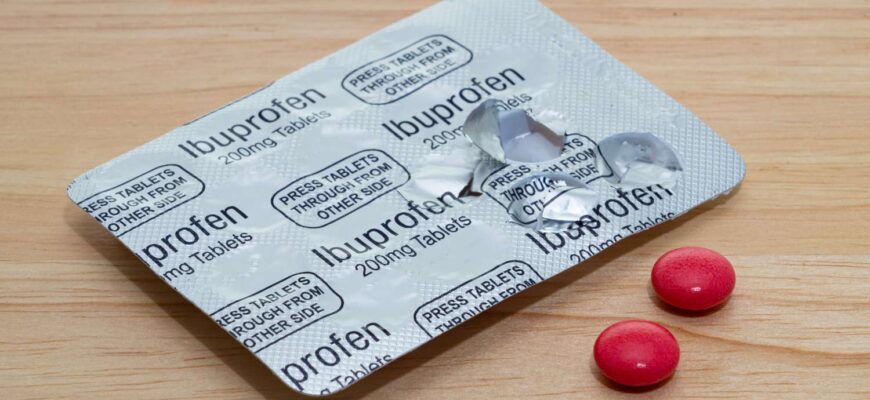
One dose of ibuprofen relieves pain for about 4 to 6 hours. It starts working in 20 to 30 minutes, and its half-life in the blood is about 2 hours.
How ibuprofen works and why the effect wears off
Ibuprofen is a nonsteroidal anti-inflammatory drug (NSAID). It blocks the COX-1 and COX-2 enzymes, which lowers prostaglandins, the chemicals that cause pain, swelling, and fever. Blood levels peak about 1 to 2 hours after a tablet and then fall by half roughly every 2 hours. That is why relief usually ends after 4 to 6 hours even though traces stay in the body longer. Most of the drug is cleared by the kidneys within about 24 hours.
Standard adult dose
The over-the-counter label allows 200 to 400 mg every 4 to 6 hours. Without a doctor’s direction, do not exceed 1,200 mg in 24 hours. Prescription ibuprofen can reach 2,400 to 3,200 mg a day, but only under medical supervision. Taking it with food or milk slows absorption slightly and is gentler on the stomach.
Onset by form
- Standard tablets: 20 to 30 minutes for the first effect.
- Liquid gels and liquid: often a little faster because they dissolve more readily.
- Extended-release forms: slower to start but can last 8 hours or more.

What changes how long it lasts
- Dose: 400 mg tends to last longer than 200 mg.
- Kidney and liver function: reduced function slows clearance.
- Age: older adults clear it more slowly and are more sensitive to side effects.
- Type of pain: inflammatory pain such as sprains or dental pain responds well, while some nerve pain does not.
Limits on how long you can use it
The label says to stop and see a doctor if pain lasts more than 10 days or a fever lasts more than 3 days. Regular daily use raises the risk of stomach ulcers, kidney problems, and high blood pressure.
Safety warnings
- All NSAIDs carry an FDA boxed warning for a higher risk of heart attack and stroke, and for stomach bleeding.
- The FDA advises avoiding NSAIDs from about week 20 of pregnancy because of possible kidney problems in the baby.
- Do not combine it with other NSAIDs such as naproxen or aspirin unless a doctor says so.
- Stop and seek help for black stools, vomiting blood, swelling of the face, or trouble breathing.
Ibuprofen or acetaminophen?
Ibuprofen also reduces inflammation, so it often works better for sprains, menstrual cramps, and dental pain. Acetaminophen does not irritate the stomach and is preferred for people who cannot take NSAIDs, but too much can damage the liver. The maximum for most adults is 3,000 to 4,000 mg a day depending on the label. Some people alternate the two under a doctor’s guidance.
Common questions
Can I take it every 4 hours? Yes, if you stay within the daily limit, but use the lowest dose that works.

Does it expire? Yes, check the date, since potency can drop after expiration.
Can I take it on an empty stomach? It is possible, but food lowers the chance of stomach upset.
Based on data from the U.S. FDA over-the-counter ibuprofen drug facts label and NSAID safety communications, and MedlinePlus (National Library of Medicine).