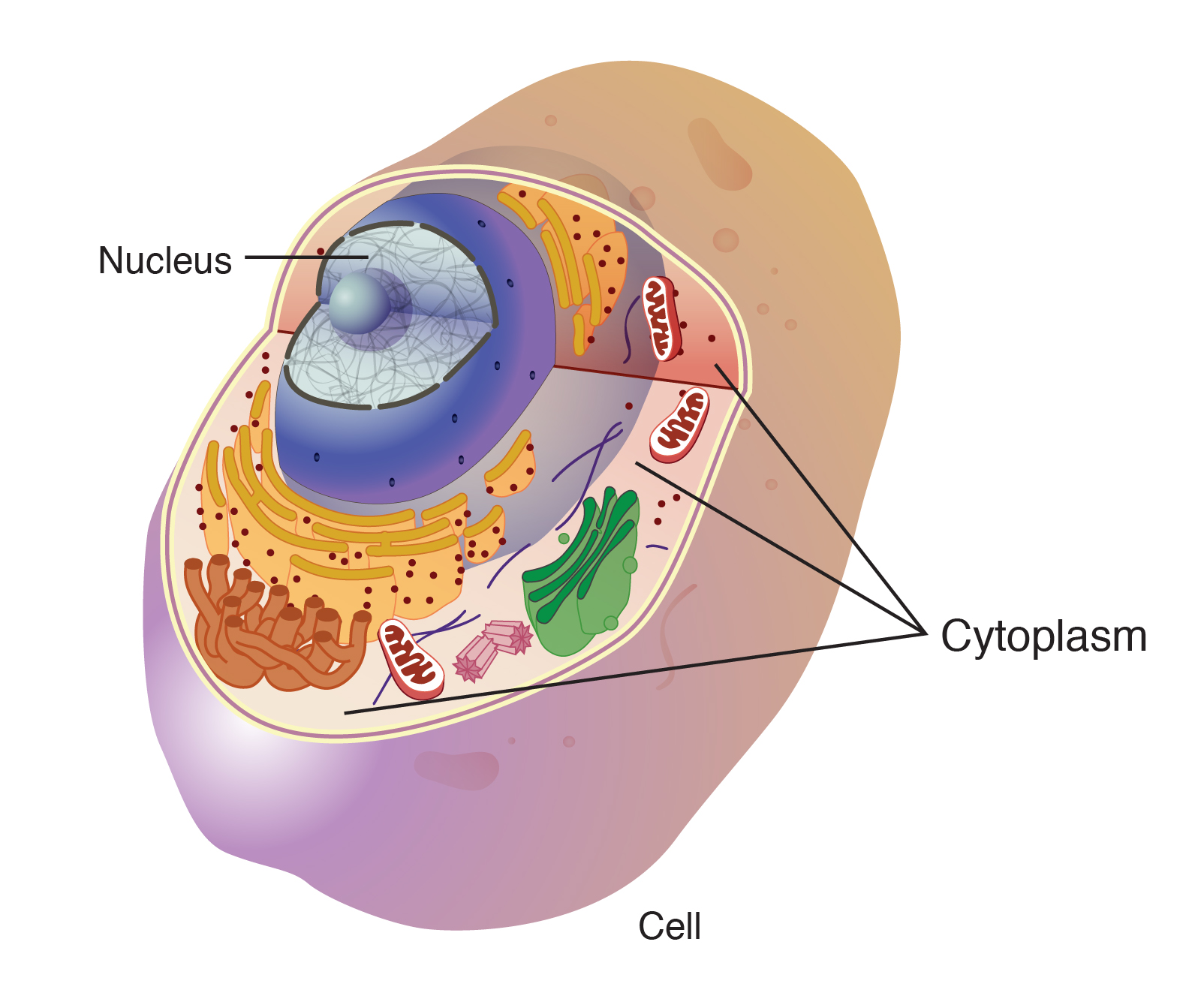
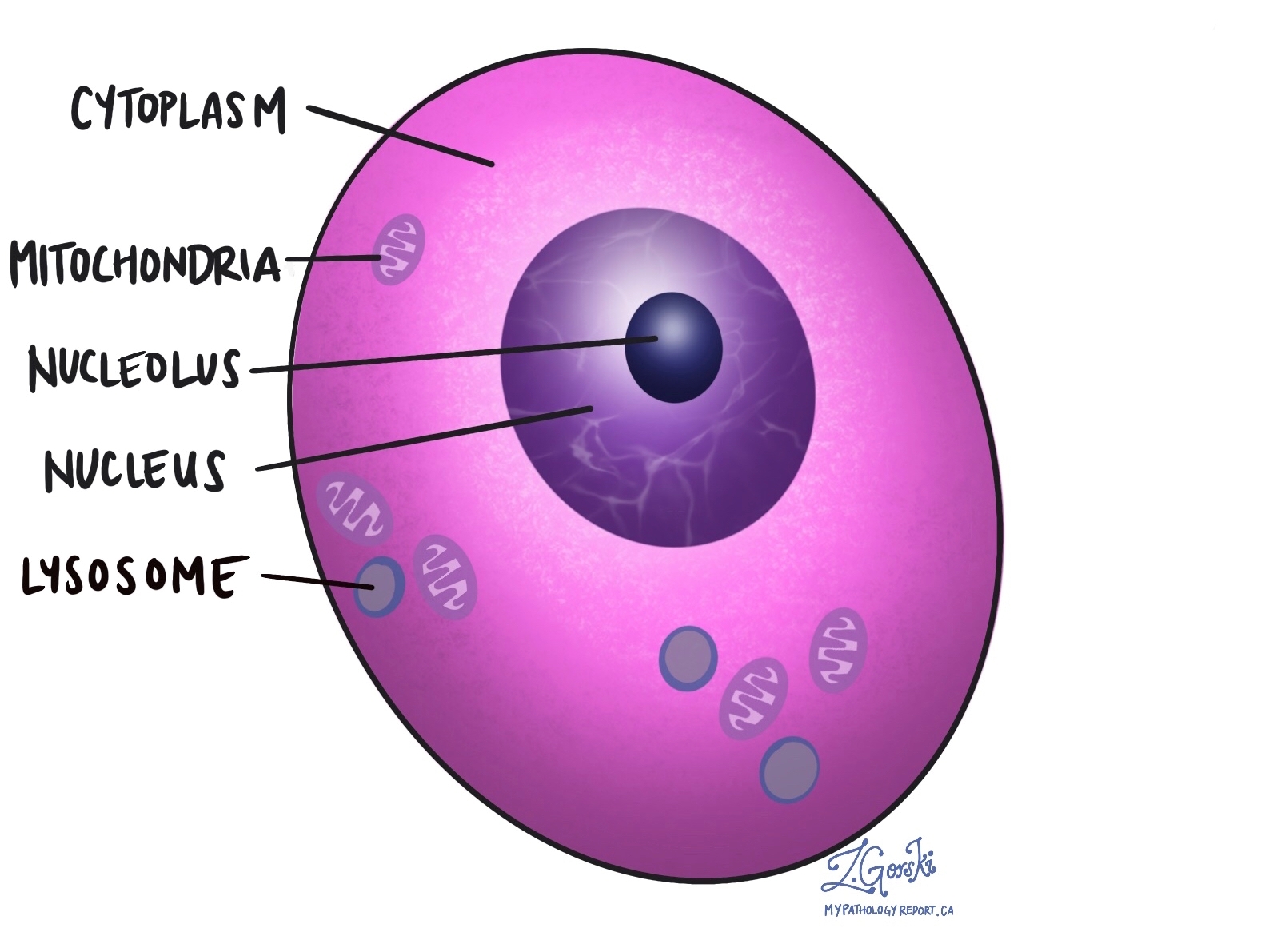
Cytoplasm is the gel-like fluid inside a cell that holds the organelles and is the site of many chemical reactions.
Functions
- Holds organelles in place.
- Hosts glycolysis, protein synthesis on free ribosomes, and many enzyme reactions.
- Helps move materials and keeps the cell’s shape.
Composition
Cytoplasm is about 80 percent water, with salts, proteins, and nutrients. The fluid part is called cytosol.
Cytoskeleton
A network of microtubules, actin filaments, and intermediate filaments supports the cell and helps it move.

In prokaryotes
Bacteria have cytoplasm containing DNA, because they lack a nucleus.
Based on data from the National Institutes of Health and standard cell biology textbooks.