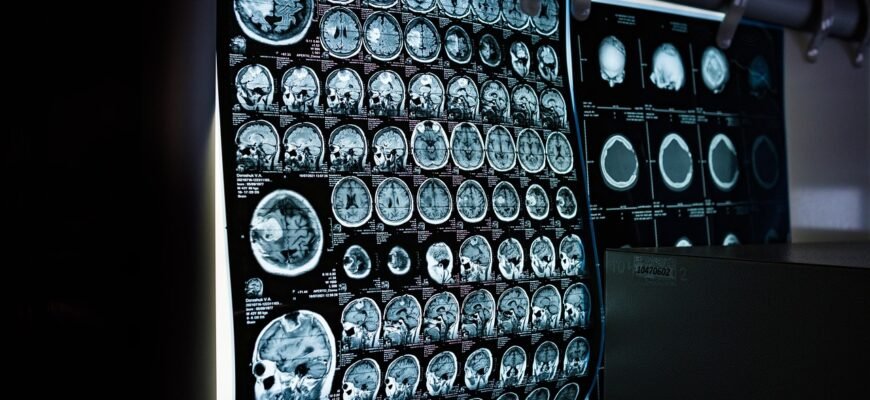
Introduction: Understanding MRI Technology
Magnetic Resonance Imaging, or MRI, is a powerful diagnostic tool that has revolutionized modern medicine. It provides detailed images of the human body’s internal structures without the need for invasive procedures. But how does an MRI work? In this comprehensive guide, we’ll delve into the science behind MRI, its applications, advantages, and more.
What is MRI?
MRI stands for Magnetic Resonance Imaging, a non-invasive imaging technology that produces three-dimensional detailed anatomical images. It is often used for disease detection, diagnosis, and treatment monitoring. Unlike X-rays and CT scans, which utilize ionizing radiation, MRI employs strong magnetic fields and radio waves.
How Does an MRI Work?
An MRI works by aligning the protons in the body’s water molecules with a powerful magnetic field. When additional radiofrequency (RF) pulses are applied, these protons are knocked out of alignment. As they return to their original position, they emit RF signals, which are captured by the scanner and converted into images by a computer.
Components of an MRI Machine
The major components of an MRI machine include:
- Main Magnet: The core component that produces a strong, uniform magnetic field.
- Gradient Coils: These are crucial for spatial encoding, allowing the location of the signals to be identified.
- RF Coils: These transmit and receive RF signals that are used to align and detect proton shifts.
- Computer System: Processes the signals to produce images.
Types of MRI Scans
Different types of MRI scans include:
- T1-Weighted MRI: Provides high-resolution images, useful for identifying anatomical detail.
- T2-Weighted MRI: Helps to highlight fluid-rich tissues, important in identifying pathological changes.
- Functional MRI (fMRI): Used primarily in brain studies to detect changes in blood flow.
- Contrast MRI: Uses contrast agents to enhance image clarity for certain tissues or blood vessels.
Applications of MRI
MRI has a wide range of applications in medical diagnostics, including:
- Neurology: Detecting brain tumors, aneurysms, and traumatic brain injuries.
- Orthopedics: Assessing joint injuries, and spinal disorders.
- Cardiology: Evaluating heart structures and blood flow.
- Oncology: Cancer detection and staging.
Advantages of MRI
Some of the advantages of MRI include:
- No Ionizing Radiation: Safe for repeated use.
- High-Resolution Images: Provides better contrast between different tissue types.
- Non-Invasive: Does not require surgery or the introduction of instruments into the body.
Cost and Pricing of MRI
The cost of an MRI scan can vary significantly based on several factors:
- Location: Urban centers often have higher prices.
- Scan Type: Specialized MRIs, such as fMRI or contrast-enhanced scans, usually cost more.
- Healthcare Facility: Private centers may charge more than public hospitals.
In general, MRI prices can range from $400 to $3,500 in the US.
Common Mistakes and Misconceptions about MRI
There are several misconceptions about MRI, including:
FAQs About MRI
| Question | Answer |
|---|---|
| How long does an MRI take? | Most MRI scans last between 30 to 60 minutes. |
| Is it possible to undergo an MRI if pregnant? | MRI is generally regarded as safe during pregnancy, especially after the first trimester. |
| Which is better: MRI or CT scan? | It depends on the clinical scenario. MRI is superior for soft tissue evaluation, while CT is better for bone injuries. |
| Are there side effects of an MRI? | MRI is non-invasive and typically has no side effects, but patients with metal implants must avoid it. |
| How to prepare for an MRI? | Patients may need to fast for a few hours and remove all metal objects before the scan. |







