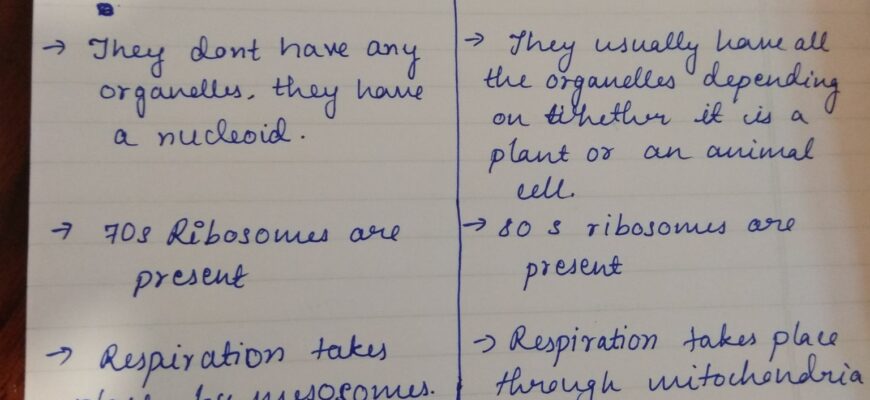
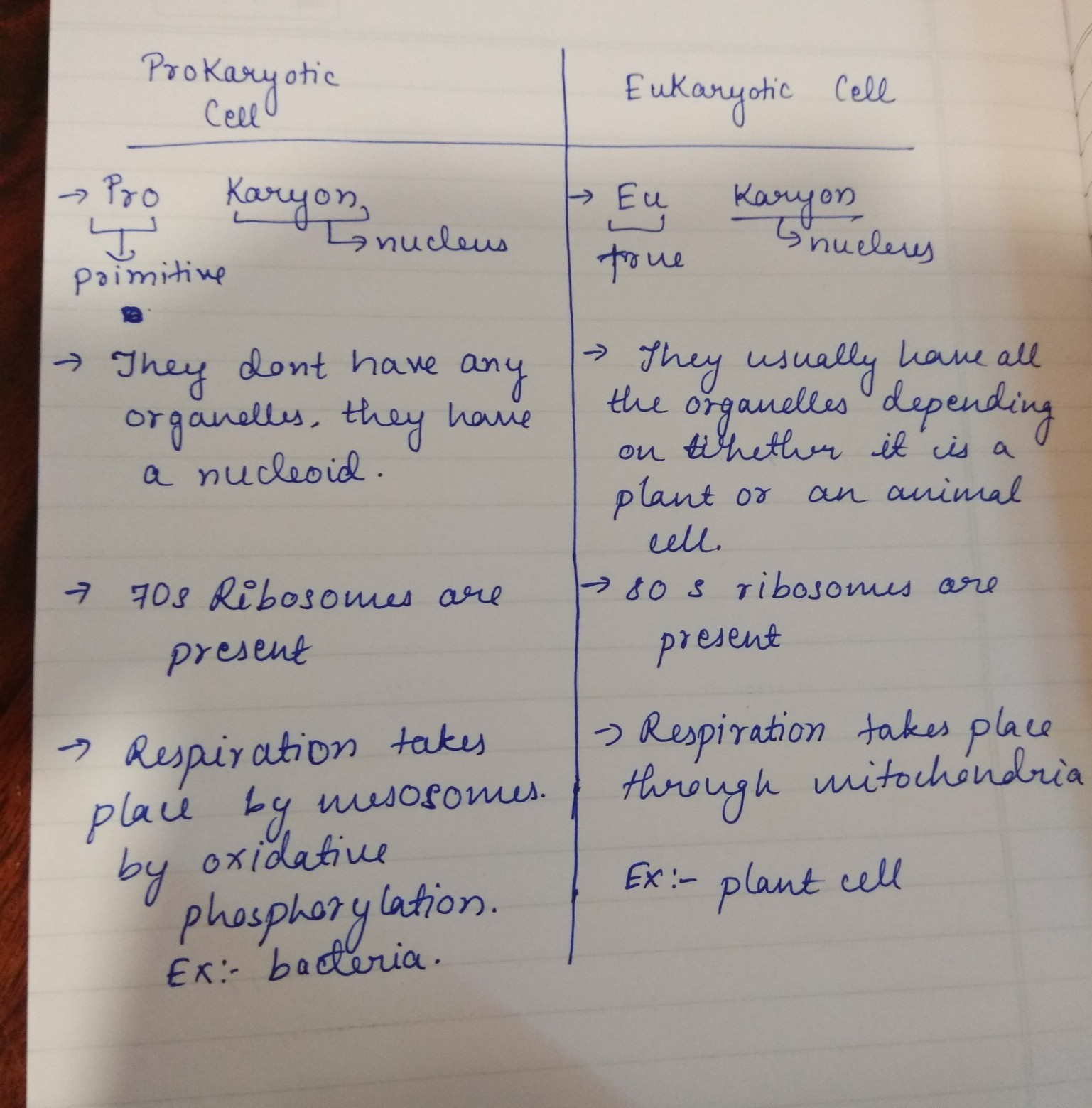
Eukaryotic cells have a nucleus and membrane-bound organelles, while prokaryotic cells do not and are generally smaller.
Prokaryotic cells
- No nucleus. DNA sits in the nucleoid.
- No membrane-bound organelles.
- Small: 0.1 to 5 micrometers.
- Bacteria and archaea.
Eukaryotic cells
- True nucleus and organelles (mitochondria, ER, Golgi).
- Larger: 10 to 100 micrometers.
- Animals, plants, fungi and protists.
Shared
Cell membrane, ribosomes, DNA and cytoplasm.
Reproduction
Prokaryotes divide by binary fission. Eukaryotes use mitosis and meiosis.

Evolution
Eukaryotes arose about 2 billion years ago, probably through endosymbiosis.

Ribosomes
Prokaryotes: 70S. Eukaryotes: 80S.
Based on data from standard biology textbooks and the National Human Genome Research Institute.