Introduction
Soreness is a common experience for many, particularly after engaging in physical activities. It signals that the body is adapting and responding to new demands. This article explores the meaning of soreness, synonymous terms, and answers frequently asked questions to provide a comprehensive understanding. Whether you’re an athlete, a fitness enthusiast, or someone new to exercise, understanding soreness can help you tailor your activities for optimal benefit.
What is Soreness?
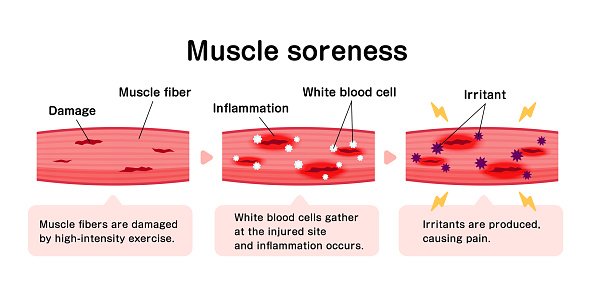
Soreness refers to the discomfort or pain in the muscles that typically occurs after intense or unfamiliar exercise. It is often a result of microscopic tears in muscle fibers. The soreness usually appears 12 to 24 hours after the activity and peaks around 24 to 48 hours later. This phenomenon is known as Delayed Onset Muscle Soreness (DOMS).
Types of Soreness
- Acute Muscle Soreness: Occurs immediately or shortly after exercise and is caused by fatigue, lactic acid buildup, or delayed muscle reaction.
- Delayed Onset Muscle Soreness (DOMS): The most common type, peaking one to two days post-exercise, as the body repairs muscle damage.
Causes of Soreness
Muscle soreness is primarily caused by physical activities that put strain on the muscles. These activities may involve movements the body is not accustomed to or workouts that are particularly intense. Other factors contributing to soreness include:
- Performing eccentric exercises, which lengthen the muscle under tension
- Increasing workout intensity or duration
- Engaging in activities after a long period of inactivity
- Lactic acid build-up
Prevention and Management of Soreness
While soreness cannot be completely avoided, its intensity can be minimized. Here are a few strategies to manage and prevent muscle soreness:
- Gradually increase the intensity of workouts to allow for adaptation
- Include a proper warm-up and cool-down in your routine
- Stay hydrated to help flush toxins and lactic acid out of muscles
- Employ techniques such as foam rolling or massage to soothe sore muscles
How to Differentiate Soreness from Injury
Understanding the difference between soreness and injury is vital to avoid damage. Soreness is typically symmetrical and affects both sides of the body evenly. Injuries, however, usually occur in one specific area and come with sharp pain, swelling, or inability to move the affected part.
Myths About Muscle Soreness
Numerous myths exist regarding muscle soreness, some of which can hinder recovery:
- Myth: Soreness indicates that a workout was effective. Reality: Soreness is not an accurate indicator of workout efficiency.
- Myth: No pain means no gain. Reality: Effective workouts do not necessarily cause pain.
- Myth: Stretching prevents soreness. Reality: While beneficial, stretching cannot fully prevent soreness.
FAQs
- What does soreness mean? Soreness is the discomfort felt in muscles after vigorous activity, due to microscopic muscle fiber tears.
- How can I relieve soreness? Rest, hydration, stretching, and gentle massage can help alleviate soreness.
- Is it safe to exercise with sore muscles? Mild activity is generally safe if soreness persists, but intense exercise may aggravate the condition.
- Can soreness be completely avoided? While it can be minimized, soreness is often a part of physical adaptation.
- When should I worry about muscle soreness? Seek medical attention if soreness is accompanied by sharp pain, swelling, or inability to move the muscle.
The above structure accounts for key elements to increase search engine visibility. This structured approach meets the requirements for HTML formatting and includes JSON-LD for potential rich snippet features on search results.







