- 3D Printing: How Does it Work?
- Introduction to 3D Printing
- What is 3D Printing?
- How Does 3D Printing Work?
- What Materials Are Used in 3D Printing?
- Types of 3D Printing Technologies
- Common Mistakes to Avoid in 3D Printing
- Which 3D Printing Technology is Better? Comparing FDM, SLA, and SLS
- Is 3D Printing Expensive?
- Applications of 3D Printing
- Future of 3D Printing
- FAQs on 3D Printing
- What is the main benefit of 3D printing?
- Is it possible to 3D print metal objects?
- How do I choose the right 3D printing material?
- What types of errors can occur during 3D printing?
- How costly is it to maintain a 3D printer?
3D Printing: How Does it Work?
3D printing, also known as additive manufacturing, has revolutionized the manufacturing industry by enabling the creation of complex objects from digital models. This article explores the fundamentals of 3D printing, its processes, and how it is transforming various industries. Learn what 3D printing is, how it works, and what mistakes to avoid for optimal results.
Introduction to 3D Printing
3D printing is a process of creating three-dimensional objects from a digital file, by successively adding material layer by layer. Unlike traditional manufacturing, which often involves subtracting material, 3D printing is known for its ability to produce intricate designs with minimal waste. This technology is used in various fields, from medical devices to aerospace components.
What is 3D Printing?
3D printing is the process of creating a physical object from a digital design. It involves layering materials such as plastic, resin, or metal to form an object. The main types of 3D printing technologies are FDM (Fused Deposition Modeling), SLA (Stereolithography), and SLS (Selective Laser Sintering), each offering distinct advantages for different applications.
How Does 3D Printing Work?
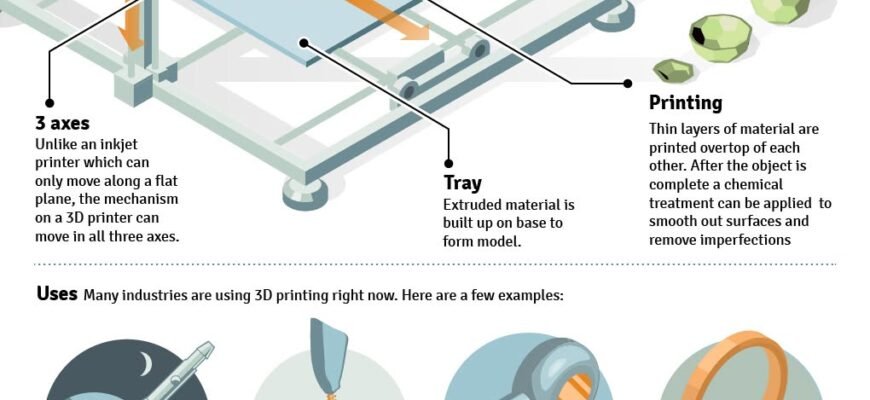
To understand how 3D printing works, consider the following steps:
- Designing: The process begins with a digital 3D model, usually created using CAD (Computer-Aided Design) software.
- File Preparation: The digital model is sliced into thin horizontal layers, creating a G-code that guides the printer.
- Printing: The 3D printer follows the G-code instructions to deposit material layer by layer, forming the final object.
- Post-Processing: Printed items may require cleaning, curing, or assembly before they are ready for use.
What Materials Are Used in 3D Printing?
3D printers utilize a variety of materials depending on the application. Common materials include:
- Thermoplastics: ABS, PLA, and PETG are popular for their ease of printing and versatility.
- Resins: Photopolymer resins are used in SLA printing for detailed and smooth finishes.
- Metals: Powders of titanium, aluminum, and stainless steel are employed in industrial applications.
- Composites: Carbon-fiber or glass-filled materials offer enhanced strength and durability.
Types of 3D Printing Technologies
Several 3D printing technologies exist, each offering unique benefits:
- FDM: Ideal for beginners and prototyping due to its affordability and ease of use.
- SLA: Provides high resolution and precision, suitable for intricate designs.
- SLS: Offers strength and complex geometries by fusing powder particles with a laser.
Common Mistakes to Avoid in 3D Printing
- Poor Design: Ensure digital models are optimized for 3D printing to avoid issues with overhangs and supports.
- Wrong Material Choice: Select materials that match the functional requirements of the printed object.
- Incorrect Printer Settings: Calibrate settings such as temperature, speed, and layer height for the best quality.
Which 3D Printing Technology is Better? Comparing FDM, SLA, and SLS
| Technology | Pros | Cons |
|---|---|---|
| FDM | Cost-effective, straightforward | Lower detail, visible layers |
| SLA | High precision, smooth finishes | Resin cost, requires post-curing |
| SLS | Strong materials, no supports | High equipment cost, complex setup |
Is 3D Printing Expensive?
The cost of 3D printing varies widely based on factors like technology, materials, and scale of production. While entry-level printers are affordable, industrial machines can be costly. However, the ability to produce custom parts on-demand can lead to significant cost savings in manufacturing.
Applications of 3D Printing
3D printing is utilized in various industries including:
- Healthcare: Custom prosthetics, dental implants, and surgical tools.
- Aerospace: Lightweight components and complex geometries.
- Consumer Goods: Custom jewelry, housing components, and toys.
Future of 3D Printing
As technology advances, 3D printing is expected to play a critical role in supply chain efficiency, personalized manufacturing, and sustainable production. Continued research and innovation are driving down costs and expanding material options.
FAQs on 3D Printing
What is the main benefit of 3D printing?
3D printing offers cost-effective customization and rapid prototyping, reducing time and waste compared to traditional manufacturing methods.
Is it possible to 3D print metal objects?
Yes, metal 3D printing is feasible using techniques like SLS and DMLS, allowing for the creation of complex and durable metal parts.
How do I choose the right 3D printing material?
Select a material based on the intended use of the object, considering factors like strength, flexibility, and finish.
What types of errors can occur during 3D printing?
Common errors include layer shifting, warping, and poor adhesion, usually due to incorrect settings or unsuitable designs.
How costly is it to maintain a 3D printer?
Maintenance costs depend on the printer type. FDM printers tend to be cheaper to maintain compared to SLA and SLS printers, which require more specialized upkeep.







