- Meaning of Reassurance
- What is Reassurance?
- Types of Reassurance
- The Role of Reassurance in Relationships
- How to Offer Reassurance
- Reassurance in Mental Health
- Common Misconceptions about Reassurance
- Is It Possible to Over-reassure?
- Reassurance Techniques in Therapy
- Reassurance Price: Time and Emotional Energy
- Common Reassurance Mistakes
- FAQ
- How to reassure someone who is anxious?
- Is reassurance necessary in every relationship?
- Can reassurance be harmful?
- What is the cost of reassurance?
- Why do people seek reassurance?
Meaning of Reassurance
Understanding the meaning of reassurance can be a pivotal step in enhancing personal and professional relationships. Reassurance is more than just offering comfort; it’s a psychological instrument that can significantly impact emotional well-being and mental health. This comprehensive guide delves into the intricacies of reassurance, its significance, and how to utilize it in various aspects of life.
What is Reassurance?
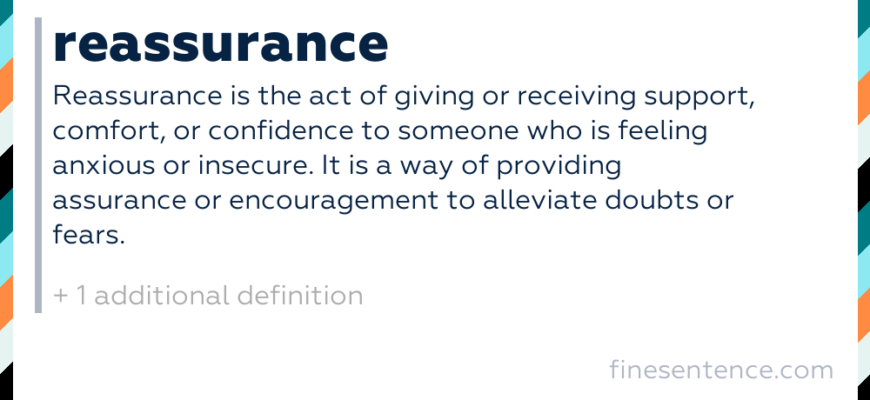
The term reassurance refers to the action of removing someone’s doubts or fears. It is an emotional relief that comes when someone affirms or reinforces someone else’s feelings, particularly in uncertain or stressful situations. Reassurance can be verbal, through direct communication, or non-verbal, through gestures and body language.
Types of Reassurance
- Verbal Reassurance: This involves spoken affirmations like, “Everything will be alright,” or “I am here for you.”
- Non-verbal Reassurance: Actions such as a warm hug, a pat on the back, or simply nodding can offer comfort.
- Tangible Reassurance: Providing material proof or evidence to alleviate worries, such as showing a clean medical test result.
The Role of Reassurance in Relationships
Reassurance plays an essential role in maintaining healthy relationships. Partners often seek reassurance about their feelings, commitment, and future plans. It helps in building trust and preventing misunderstandings. Lack of reassurance can lead to insecurity and emotional distress.
How to Offer Reassurance
Offering reassurance requires sensitivity and understanding. Here are some effective ways to reassure someone:
- Listen Actively: Pay full attention to understand their concerns.
- Empathize: Show that you understand and empathize with their emotions.
- Provide Assurance: Offer verbal cues or actions that confirm your support.
- Follow Up: Check in regularly to show continued support and care.
Reassurance in Mental Health
In mental health contexts, reassurance can sometimes become a double-edged sword. While it provides immediate relief from anxiety or stress, over-reliance on reassurance might perpetuate anxiety disorders or dependence. Professional therapy often works towards building self-reassurance techniques.
Common Misconceptions about Reassurance
| Misconception | Reality |
|---|---|
| Reassurance is only verbal. | Reassurance includes verbal, non-verbal, and tangible actions. |
| Any reassurance is helpful. | Excessive reassurance can negatively affect mental health by fostering dependency. |
| Reassurance is a sign of weakness. | Seeking reassurance is a normal human need, not a weakness. |
Is It Possible to Over-reassure?
Yes, it is possible. Over-reassurance occurs when reassurance is given excessively or inappropriately, potentially leading to increased anxiety, dependency, or avoidance behaviors. Balanced reassurance is crucial for promoting independence and confidence.
Reassurance Techniques in Therapy
- Cognitive Behavioral Techniques: These involve challenging negative beliefs and encouraging self-reassurance.
- Meditation and Mindfulness: Practices that focus on self-soothing and internal reassurance.
Reassurance Price: Time and Emotional Energy
While reassurance itself often isn’t monetarily priced, it does require an investment of time and emotional energy. Building affirming relationships involves consistent effort and genuine care. It’s crucial to ensure this emotional currency is balanced to prevent burnout.
Common Reassurance Mistakes
- Ignoring Non-Verbal Cues: Overlooking body language can lead to offering inappropriate reassurance.
- Using Clichés: Relying on phrases like “Don’t worry” without addressing the underlying concerns.
- Excessive Reassurance: Providing too much reassurance may foster dependency and inhibit problem-solving abilities.
FAQ
How to reassure someone who is anxious?
Listen actively, offer empathy, provide verbal reassurances aligned with facts, and encourage positive thinking.
Is reassurance necessary in every relationship?
Yes, reassurance is necessary as it helps build trust and reinforces emotional bonds, but the degree may vary based on individual needs.
Can reassurance be harmful?
Excessive reassurance can hinder independence and intensify anxiety; hence it should be balanced and fostering self-assurance.
What is the cost of reassurance?
Reassurance involves emotional and time investments and should be balanced to prevent emotional exhaustion.
Why do people seek reassurance?
People seek reassurance to confirm their beliefs, alleviate fears, and gain psychological or emotional comfort in uncertain situations.







