The cell membrane controls what enters and leaves the cell, protects it, and helps maintain its internal environment.
Main functions
- Barrier: it separates the inside of the cell from the outside.
- Selective transport: it controls entry and exit of water, ions, and nutrients through channels, pumps, and carriers.
- Communication: receptors detect signals such as hormones.
- Cell recognition: surface molecules identify cells to the immune system.
Structure
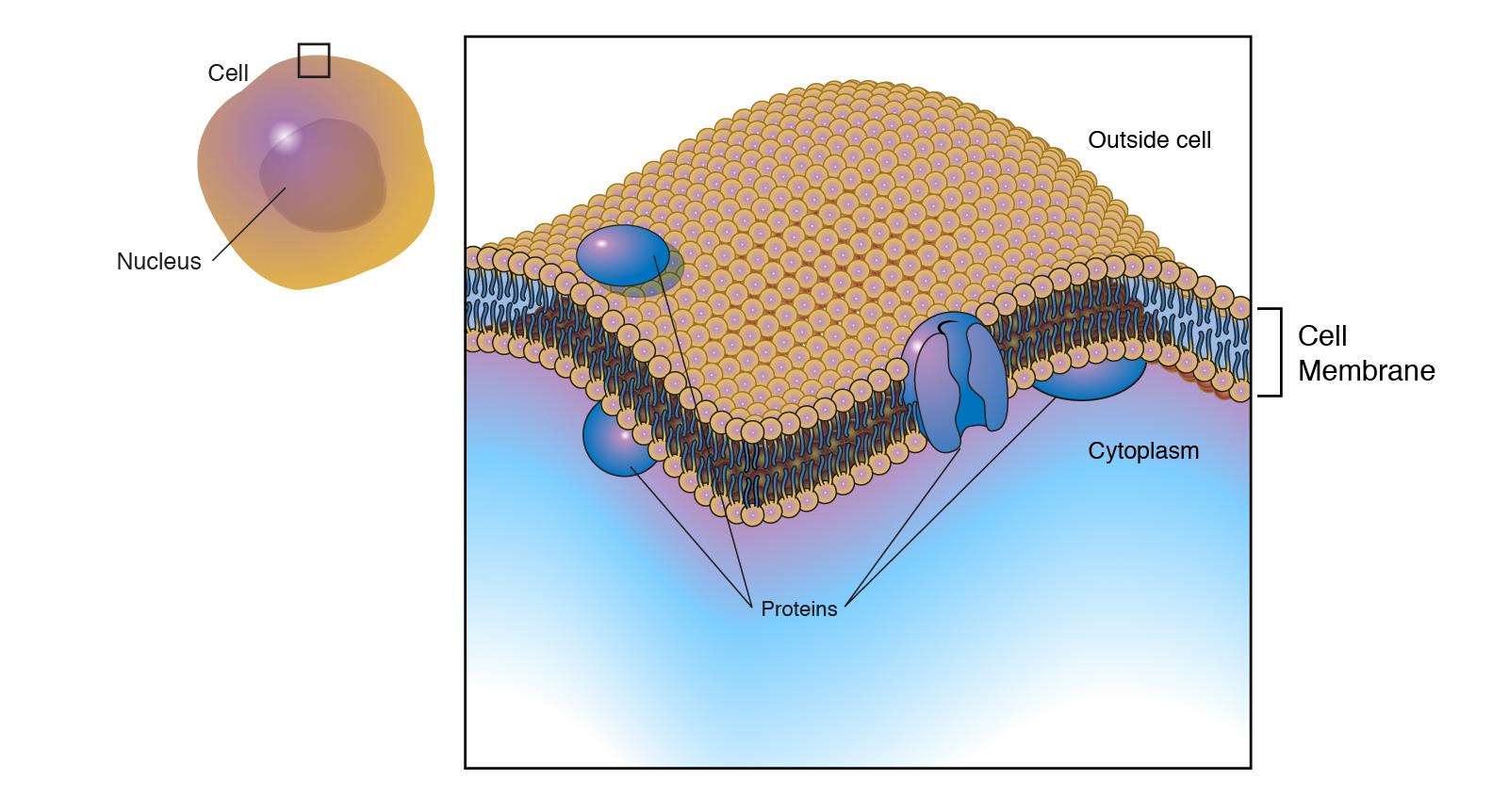
The membrane is a phospholipid bilayer about 7 to 10 nanometers thick, with embedded proteins and cholesterol. This is called the fluid mosaic model.
Transport types
Passive transport needs no energy (diffusion, osmosis), while active transport uses ATP, such as the sodium potassium pump.


Not just animals
Plant cells also have a cell wall outside the membrane.
Based on data from the National Institutes of Health and standard cell biology textbooks.