- Understanding the Meaning of Gravida and Para: A Comprehensive Guide
- What is Gravida?
- Types of Gravida: Nulligravida and Multigravida
- What is Para?
- Understanding the GTPAL System: A Detailed Overview
- Which is Better in Documentation: Gravida/Para or GTPAL?
- Common Mistakes in Understanding and Documenting Gravida and Para
- Importance of Understanding Gravida and Para for Expecting Mothers
- How to Calculate Gravida and Para: Practical Tips
- The Role of Gravida and Para in Prenatal Care
- FAQ
Understanding the Meaning of Gravida and Para: A Comprehensive Guide
In the realm of obstetrics, the terms “gravida” and “para” are crucial for understanding a woman’s pregnancy history. These terms provide invaluable insights into her reproductive health, guiding healthcare professionals in delivering the best care. With myriad search queries on this topic, this article aims to deliver an authoritative and comprehensive guide on gravida and para, leveraging insights to optimize visibility and searchability online.
What is Gravida?
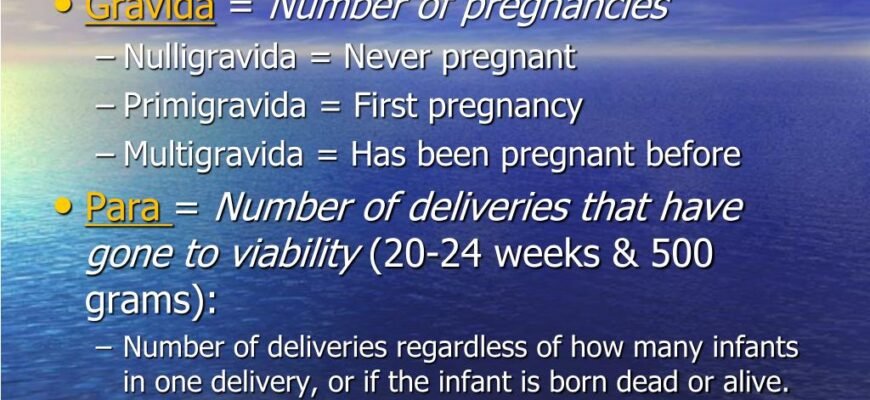
The term “gravida” refers to the number of times a woman has been pregnant, regardless of the pregnancy outcome. It includes current pregnancies, miscarriages, and ectopic pregnancies, providing a complete picture of a woman’s obstetric history.
Types of Gravida: Nulligravida and Multigravida
Two primary terms describe a woman’s gravida status:
- Nulligravida: A woman who has never been pregnant.
- Multigravida: A woman who has been pregnant more than once.
What is Para?
Para refers to the number of pregnancies that have progressed to viable gestational age, typically over 20 weeks. It does not count the number of babies born, but the number of pregnancies carried to a viable stage, providing crucial insights into a woman’s reproductive history.
Understanding the GTPAL System: A Detailed Overview
The GTPAL system is a detailed way to document a woman’s obstetric history, necessary for comprehensive understanding and medical care:
- G – Gravida: Total number of pregnancies.
- T – Term births: Number of pregnancies carried to term (37 weeks or more).
- P – Preterm births: Number of pregnancies delivered between 20 and 37 weeks.
- A – Abortions: Number of pregnancies ending in miscarriage or abortion before 20 weeks.
- L – Living children: Number of children currently alive.
Which is Better in Documentation: Gravida/Para or GTPAL?
For healthcare professionals, using the GTPAL method provides a more detailed and comprehensive view of a woman’s pregnancy history compared to the traditional gravida/para documentation. This level of detail assists in crafting more accurate and personalized care plans.
Common Mistakes in Understanding and Documenting Gravida and Para
Accurately documenting gravida and para is critical; common mistakes include miscounting miscarriages or including multiple births (like twins) as more than one para. Understanding proper terminology and counting methods helps prevent these errors.
Importance of Understanding Gravida and Para for Expecting Mothers
For expecting mothers, familiarity with terms like gravida and para helps them communicate more effectively with their healthcare providers, leading to better-informed decisions throughout their pregnancy journey.
How to Calculate Gravida and Para: Practical Tips
Calculating gravida and para involves simple arithmetic, counting each pregnancy regardless of outcome for gravida, and counting each pregnancy carried past 20 weeks for para. Understanding this can demystify medical documentation in prenatal care.
The Role of Gravida and Para in Prenatal Care
Gravida and para play crucial roles in prenatal care, impacting risk assessment and guiding necessary interventions. They enable healthcare providers to foresee possible complications and prepare accordingly.
FAQ
-
What does gravida 3 para 2 mean?
Gravida 3 para 2 means a woman has been pregnant three times and has had two pregnancies that reached viable gestational age.
-
Can a woman be nulliparous and multigravida?
Yes, a woman can be nulliparous and multigravida if she has been pregnant multiple times without any pregnancy reaching a viable gestational age.
-
Is a stillbirth considered in para count?
Yes, a stillbirth is included in the para count if it occurred after 20 weeks of gestation, as it reached a viable gestational age.
-
How are twins counted in gravida and para?
Twins are counted as one gravida and one para, as they represent a single pregnancy reaching viable gestational age.
-
What role does gravida play in assessing pregnancy risk?
Gravida helps assess risk by indicating a woman’s pregnancy history, informing healthcare providers about potential complications based on multiple pregnancies.







