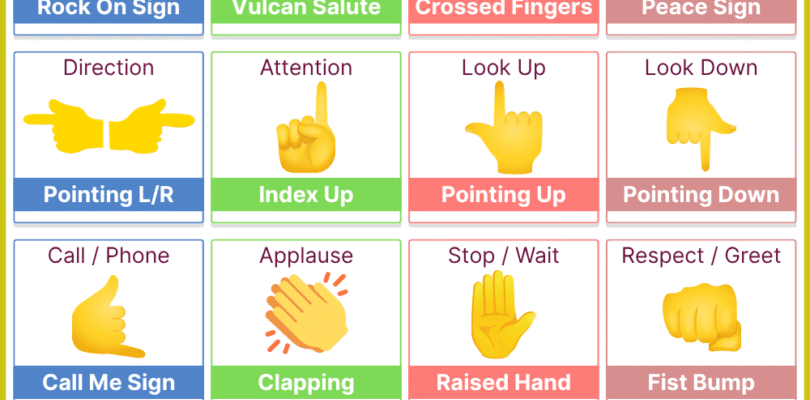
Introduction to the Meaning of Hand Signs
Hand signs have been used across various cultures and communities for centuries. They are a universal language that transcends verbal communication, offering insights into human behavior, beliefs, and emotions. Understanding these signs can improve communication in social and professional settings. In this comprehensive guide, we explore the meaning of hand signs, their cultural significance, and their practical applications in modern society.
The Historical Significance of Hand Signs
Hand signs have a rich history that dates back to ancient civilizations. From religious rituals to political movements, these gestures have been integral in conveying messages and emotions. The ancient Romans, for instance, used hand signals in combat and sports to communicate strategies without alerting enemies. Similarly, in Hinduism and Buddhism, hand gestures or “mudras” are used during meditation to channel specific energy flows.
- Mudras in Eastern religions: Spiritual significance in rituals and meditation.
- Roman hand signals: Used for strategic communication in warfare.
- Indigenous hand signs: Cultural expressions often linked to storytelling.
Modern-Day Usage of Hand Signs
In today’s world, hand signs have seamlessly integrated into daily life, from casual conversations to formal settings. In businesses, professionals employ gestures to enhance presentations and facilitate negotiations. In social media, emojis represent simplified digital hand signs, conveying a range of emotions quickly and effectively. Understanding these signs can significantly enhance interpersonal communication.
| Context | Common Hand Signs | Meaning |
|---|---|---|
| Business | Handshake, thumbs up | Agreement, approval |
| Social | Peace, wave | Harmony, greeting |
| Digital | Emojis | Emotional expression |
Cultural Variations in Hand Signs
Hand signs can vary significantly across cultures. A gesture that is positive in one culture may be offensive in another. For example, the “thumbs up” is a sign of approval in many Western countries, but in some Middle Eastern cultures, it may be considered rude. Understanding these cultural variations is crucial for global communication.
Common Hand Signs and Their Meanings
Many hand signs have universally recognized meanings. However, some are more subjective and can convey different messages based on the context in which they are used. Let’s delve into some of the most common hand signs and examine their meanings:
- Peace Sign: Used globally to denote harmony and goodwill.
- OK Gesture: Signifies approval but can have offensive connotations in some cultures.
- Finger Pointing: Used for emphasis but can be seen as confrontational.
How to Interpret Hand Signs
Interpreting hand signs requires an understanding of contextual cues and cultural background. To accurately read hand signs, observe accompanying body language, facial expressions, and situational context. Becoming a keen observer can lead to improved interpersonal skills.
Hand Signs in Professional Settings
In professional environments, hand signs can enhance presentations and negotiations. For instance, using open hand gestures can create a perception of openness and transparency during a discussion. Mastering these gestures can influence how messages are received in a corporate setting.
- Open Hands: Sign of honesty and receptiveness.
- Handshake: A traditional symbol of agreement and respect.
- Firm Gestures: Used to emphasize points during discussions.
Common Mistakes with Hand Signs
Not all gestures are appropriate in every situation, and misuse can lead to misunderstandings or offend an audience. The key is to be aware of who you’re communicating with and adjust your hand signs accordingly. Avoid excessive gesturing, as it can distract from the message.
FAQs About Hand Signs
- What is the meaning of the ‘peace sign’? The peace sign, made by raising the index and middle fingers in a V shape, generally signifies peace and goodwill.
- How to use hand gestures effectively in presentations? Use clear, purposeful gestures to emphasize key points and engage the audience more effectively.
- Which hand signs are considered offensive? Certain signs like the ‘OK’ or ‘thumbs up’ can be offensive in different cultural contexts.
- Is it possible to learn hand signs for better communication? Yes, studying and practicing hand signs can significantly improve personal and professional communication skills.
- What should I avoid when using hand gestures? Avoid using excessive or culturally inappropriate gestures that could lead to misunderstandings.







