- Introduction to Prehistory
- Understanding the Meaning of Prehistory
- The Significance of Prehistoric Studies
- Major Eras in Prehistory: Paleolithic, Mesolithic, and Neolithic
- Tools and Technologies of Prehistoric Times
- Role of Archaeology in Uncovering Prehistory
- Prehistoric Art and Symbolism
- Prehistoric Climate and Environmental Changes
- Frequently Asked Questions about Prehistory
Introduction to Prehistory
Prehistory is a term that elicits curiosity and fascination, often characterized by the absence of written records, which defines the era before recorded history. This era, a vast stretch of human existence, is primarily understood through archaeological findings and anthropological research. Delving into the meaning of prehistory reveals insights into human evolution, societal development, and the intricate tapestry of life that precedes historical documentation.
Understanding the Meaning of Prehistory
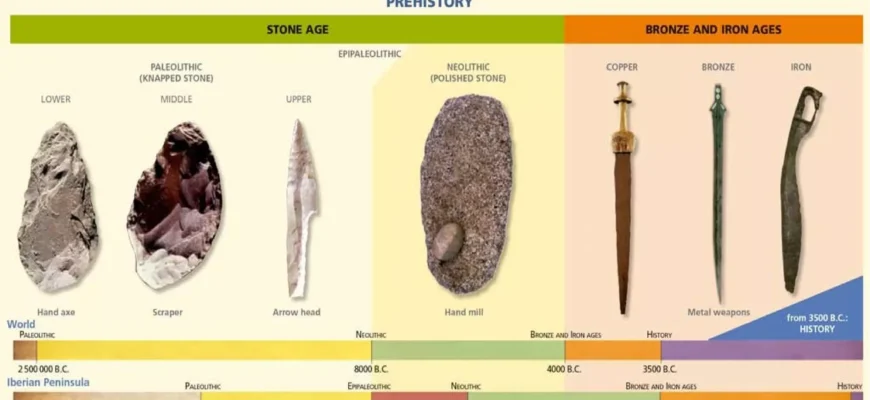
The term “prehistory” encompasses the period from the emergence of the first hominins to the advent of written language, spanning millions of years. It is divided into three major epochs – the Paleolithic, Mesolithic, and Neolithic periods. Each epoch is distinguished by significant developments in human tool-making, cultural practices, and environmental adaptations.
The Significance of Prehistoric Studies
Studying prehistory is crucial for understanding the evolutionary trajectory of humankind and the environmental factors that shaped early societies. It provides insights into the origins of culture, the development of technology, and the foundations of modern civilization. Archaeology plays a pivotal role in uncovering the remnants of prehistoric life through artifacts, fossils, and tool analysis.
Major Eras in Prehistory: Paleolithic, Mesolithic, and Neolithic
The Paleolithic era, or the “Old Stone Age,” marks the earliest period of human tool development and includes the evolution of early hominins. The Mesolithic, or “Middle Stone Age,” serves as a transitional phase with advancements in microlith tools. The Neolithic, or “New Stone Age,” heralds the beginning of agriculture, permanent settlements, and technological innovations such as pottery and weaving.
Tools and Technologies of Prehistoric Times
Prehistoric tools were primarily crafted from stone, bone, and wood. The evolution of tool-making reflects the ingenuity and adaptability of early humans. Hunting spear tips, hand axes, and later, the development of agriculture tools, symbolize technological progress. Understanding these tools provides insight into the daily lives and survival strategies of prehistoric societies.
Role of Archaeology in Uncovering Prehistory
Archaeology serves as a window into prehistory, utilizing scientific methods to analyze physical remains and reconstruct past environments. Techniques such as carbon dating, stratigraphy, and isotopic analysis enable archaeologists to date artifacts and understand the lifestyles of prehistoric peoples. These findings contribute to a broader understanding of human history.
Prehistoric Art and Symbolism
Prehistoric art, including cave paintings, petroglyphs, and figurines, provides a glimpse into the cognitive and cultural development of early humans. These artifacts reveal early humans’ understanding of their environment, spiritual beliefs, and social dynamics. They are critical to comprehending the symbolic and communicative aspects of prehistoric life.
Prehistoric Climate and Environmental Changes
Climate played a crucial role in shaping prehistoric societies. Fluctuations in climate led to migrations, adaptations, and the development of sustainable practices. Understanding the environmental challenges faced by prehistoric humans helps contextualize their technological and cultural advancements.
Frequently Asked Questions about Prehistory
- What is prehistory, and why is it important?
Prehistory refers to the time before written records. It is important because it helps us understand human evolution and the development of early societies. - How do archaeologists study prehistory?
Archaeologists study prehistory through excavation, artifact analysis, and scientific dating methods like carbon dating. - What are the primary epochs of prehistory?
The primary epochs are the Paleolithic, Mesolithic, and Neolithic periods, each marked by distinct technological and cultural advancements. - How did prehistoric humans adapt to climate changes?
Prehistoric humans adapted by developing new tools, migrating to favorable environments, and altering their subsistence practices. - What kind of tools did prehistoric people use?
They used stone, bone, and wood tools for hunting, gathering, and later, agriculture.







