Understanding the Sea Change: A Comprehensive Guide
Introduction
The term “sea change” is often heard in conversations about major transformations. But what does it truly mean? In this article, we will delve deep into the meaning of “sea change,” exploring its origins, uses, and relevance in various contexts. By the end, you’ll have a thorough understanding of how this concept influences our lives and industries.
What is a Sea Change?
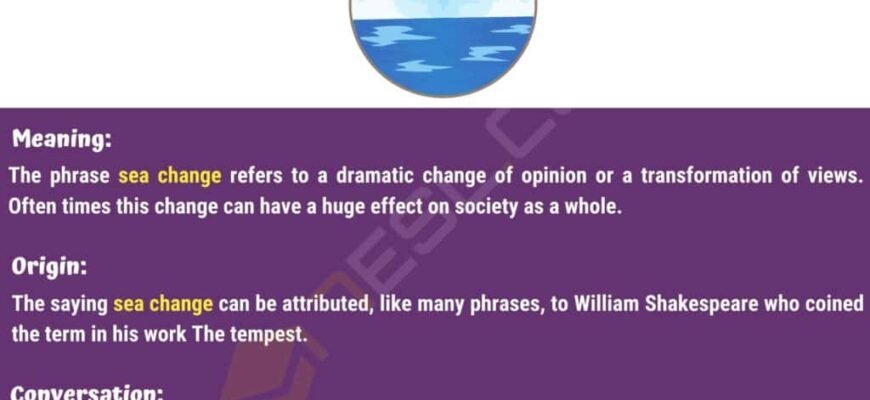
A sea change refers to a profound or notable transformation. The term originates from William Shakespeare’s play “The Tempest,” where it describes a radical transformation. In modern usage, it signifies fundamental shifts in thinking, practices, or conditions.
Origins of the Term “Sea Change”
The phrase “sea change” first appeared in Shakespeare’s “The Tempest.” The character Ariel sings about a significant transformation, likening it to a change brought upon by the sea. This metaphorical use highlights dramatic change, often unexpected and thorough.
Sea Change in Business
In business, a sea change often refers to significant shifts in market dynamics, organizational structure, or consumer behavior. Companies must adapt to these changes to stay competitive. Embracing innovation and flexibility can facilitate successful navigation through such transitions.
Sea Change in Technology
Technological advancements often lead to sea changes across industries. The digital revolution, for instance, has dramatically altered how businesses operate, communicate, and reach consumers. Companies that fail to adapt to technological sea changes risk obsolescence.
- Adoption of AI and machine learning
- Transition to cloud computing
- Evolution of e-commerce platforms
Sea Change in Society
Sea changes are not limited to business and technology. They also occur in social contexts, influencing cultural norms, values, and societal structures. Events such as the digital age, globalization, and demographic shifts contribute to societal sea changes.
How to Adapt to a Sea Change
Adapting to a sea change requires a proactive approach. Organizations and individuals should anticipate potential changes and develop strategies for adaptation. This includes continuous learning, fostering resilience, and maintaining agility in decision-making processes.
- Monitor industry trends and forecasts
- Invest in employee training and development
- Encourage innovation and creative problem-solving
Sea Change vs. Incremental Change
It’s essential to differentiate between sea changes and incremental changes. While incremental changes involve gradual improvements, sea changes are drastic and can redefine existing paradigms. Recognizing the nature of change helps in planning appropriate responses.
| Aspect | Sea Change | Incremental Change |
|---|---|---|
| Scope | Comprehensive | Limited |
| Impact | Profound | Minor |
| Speed | Rapid | Gradual |
Common Mistakes in Managing Sea Change
Managing sea changes can be challenging. Common mistakes include resistance to change, lack of strategic vision, and failure to communicate effectively. Avoiding these pitfalls can enhance the likelihood of successfully navigating through transformations.
FAQ
What is the meaning of sea change?
A sea change signifies a profound transformation, often altering the foundation of a concept, system, or approach.
How to adapt to a sea change?
Adjusting to a sea change involves staying informed about trends, embracing innovation, and fostering a flexible mindset.
What industries experience sea changes?
Industries such as technology, finance, and retail often experience sea changes due to rapid advancements and shifting consumer behaviors.
Is it possible to predict a sea change?
Predicting a sea change is challenging, but monitoring industry trends and economic indicators can provide insights.
What are common mistakes during a sea change?
Resistance to change, poor communication, and inadequate planning are common mistakes made during a sea change.
This article provides an in-depth exploration of the concept of a sea change, covering various aspects from its meaning to its impact across different domains. It includes practical advice, common pitfalls, and comparisons with incremental change, all formatted for SEO optimization. Additionally, the structured data in JSON-LD format will help ensure the article is eligible for enhanced visibility through Google’s Rich Results.







