- Understanding the Meaning of Systemic
- What Does Systemic Mean?
- Systemic in Medicine: Overview and Examples
- Systemic and Banking: Important Considerations
- The Role of Systemic Approaches in Ecology
- Systemic Change in Society: What You Need to Know
- How to Identify Systemic Issues: A Guide
- Common Mistakes in Addressing Systemic Problems
- Systemic Solutions: Which is Better?
- Systemic vs. Systematic: Clarifying the Difference
- Summary Table: Key Aspects of Systemic Across Contexts
- FAQs on Systemic
- What is Systemic in Simple Terms?
- How Do You Identify Systemic Problems?
- Why is Systemic Risk Important in Banking?
- What’s the Difference Between Systemic and Systematic?
- Can Systemic Issues Be Resolved Easily?
Understanding the Meaning of Systemic
The term “systemic” is widely used in various fields including medicine, banking, ecology, and sociology. Its versatile nature makes it imperative to understand its meaning in different contexts. This article delves into the multifaceted definition of systemic, explores its relevance across disciplines, and answers common questions related to its application.
What Does Systemic Mean?
Systemic refers to something that affects the entire system. In medical terms, it pertains to diseases or conditions impacting multiple organs or the whole body. In ecological contexts, it references processes that influence entire ecosystems. Understanding the core meaning of the term offers insight into its widespread applicability.
Systemic in Medicine: Overview and Examples
In the medical field, systemic refers to conditions or diseases that affect multiple parts of the body. For example, systemic inflammation involves widespread inflammation affecting various body systems. Systemic lupus erythematosus is another condition where the immune system attacks multiple organs. The term underscores the need for treatments that address body-wide issues.
Systemic and Banking: Important Considerations
In finance, systemic risk represents the potential for a breakdown in the entire financial system, as opposed to just a single entity. This risk became evident during the 2008 financial crisis, which highlighted the vulnerability of global financial networks. Identifying and mitigating systemic risks is crucial for safeguarding economic stability.
The Role of Systemic Approaches in Ecology
Systemic processes in ecology consider interactions within ecosystems and recognize interdependencies among organisms. This approach underscores the need for holistic conservation strategies. For instance, addressing a systemic ecological issue like deforestation involves looking at the entire ecosystem, from flora and fauna to human impacts.
Systemic Change in Society: What You Need to Know
Systemic change involves transformation within societal structures, policies, and norms. It transcends surface-level adjustments to address root causes of social issues, such as inequality or injustice. Achieving systemic change typically requires coordinated efforts across different sectors and stakeholders.
How to Identify Systemic Issues: A Guide
Identifying systemic issues involves looking for patterns that indicate widespread problems rather than isolated incidents. This can be done through data analysis, stakeholder interviews, and evaluations of existing processes. Recognizing these systemic issues can pave the way for effective interventions and solutions.
Common Mistakes in Addressing Systemic Problems
One common mistake is focusing on surface-level symptoms without addressing the underlying systemic issues. Another error is attempting isolated interventions that do not consider the broader system dynamics. Successful strategies for systemic issues require comprehensive analysis and integrated approaches.
Systemic Solutions: Which is Better?
Systemic solutions aim to address the root cause of a problem rather than just the symptoms. Tailored solutions considering specific system dynamics are often more effective. For instance, comprehensive reform in an educational system might involve curriculum changes, teacher training, and policy amendments to achieve long-term improvements.
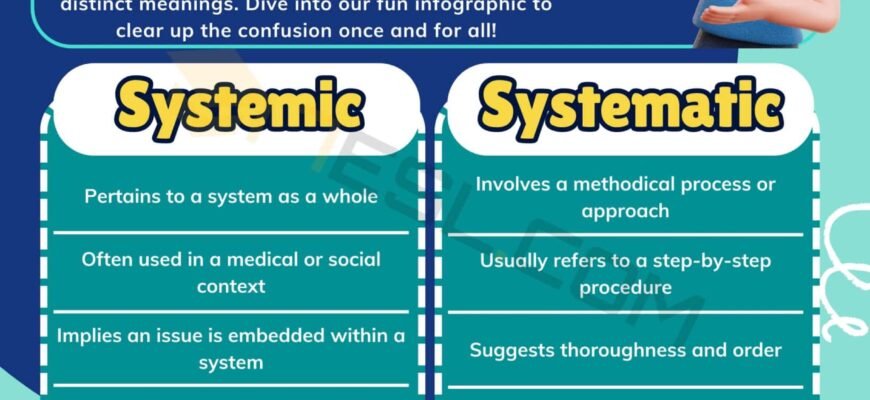
Systemic vs. Systematic: Clarifying the Difference
While systemic refers to something affecting the entire system, systematic relates to a methodical process or approach. Understanding this distinction is crucial in ensuring accurate communication and application of these terms. For example, addressing a systemic issue might require a systematic plan.
Summary Table: Key Aspects of Systemic Across Contexts
| Field | Systemic Meaning | Example |
|---|---|---|
| Medicine | Affects the entire body | Systemic lupus erythematosus |
| Finance | Affects the whole financial system | 2008 Financial Crisis |
| Ecology | Affects entire ecosystems | Deforestation |
| Society | Affects societal structures | Social inequality |
FAQs on Systemic
What is Systemic in Simple Terms?
Systemic refers to something that impacts the whole system, whether it’s the human body, an ecosystem, or a financial network.
How Do You Identify Systemic Problems?
Systemic problems are identified by analyzing patterns that suggest widespread issues rather than isolated incidents, using data and stakeholder insights.
Why is Systemic Risk Important in Banking?
Systemic risk is important because its impact can lead to the collapse of entire financial systems, making it crucial for maintaining economic stability.
What’s the Difference Between Systemic and Systematic?
Systemic refers to affecting the entire system, while systematic is about having a methodical approach or plan.
Can Systemic Issues Be Resolved Easily?
Systemic issues are complex and usually require comprehensive, coordinated efforts to address the root causes effectively.







