- Understanding IEP: What Does It Stand For and Why Is It Important?
- Introduction to IEP
- What Is an IEP?
- IEP Goals and Objectives
- IEP vs. 504 Plan: Which Is Better?
- The IEP Process: How to Develop an Effective IEP
- IEP Meetings: What to Expect
- Common Mistakes in IEP Development
- IEP Costs: Is There a Price?
- IEP Implementation: How Schools Support Students
- FAQ: Understanding IEP
Understanding IEP: What Does It Stand For and Why Is It Important?
The term “IEP” is essential in the context of education, especially for parents and educators working with children who have special needs. Understanding what an IEP stands for, its implications, and how it can be effectively utilized is crucial. This comprehensive guide will explore everything you need to know about IEPs, their benefits, procedural aspects, and common questions surrounding them.
Introduction to IEP
IEP stands for Individualized Education Program. It is a legally binding document designed to meet the unique educational needs of a child with a disability. IEPs are critical in ensuring that children receive the appropriate support and services to succeed academically. Developed collaboratively by educators, parents, and specialists, the IEP outlines the child’s current performance, set goals, and the support needed to achieve those goals.
What Is an IEP?
An IEP is more than just a plan; it is a tailored educational framework. It includes specific educational goals, the services the school will provide, and how progress will be measured. An IEP is unique to each child and is reviewed and updated annually to adjust to the child’s evolving needs.
IEP Goals and Objectives
One of the core components of an IEP is establishing measurable goals and objectives. These are derived from the current educational assessments and observations. The goals must be specific, measurable, achievable, relevant, and time-bound (SMART). This structure ensures that the child has clear targets to strive toward, and educators have a roadmap to guide them.
IEP vs. 504 Plan: Which Is Better?
- IEP: Provides individualized special education and related services.
- 504 Plan: Provides modifications and accommodations to support educational access.
Choosing between an IEP and a 504 Plan can be challenging. An IEP is generally more detailed and is used when a child needs specialized instruction. In contrast, a 504 Plan offers accommodations but does not include specialized instruction. The decision should be based on the child’s specific needs, and in some cases, a child may benefit from both.
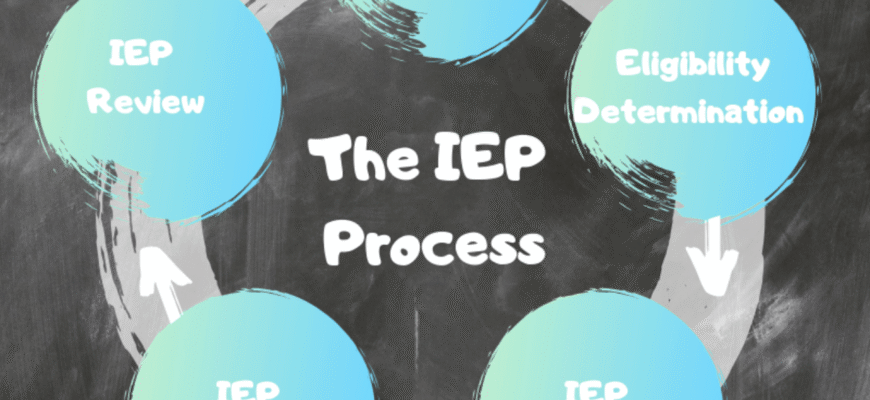
The IEP Process: How to Develop an Effective IEP
- Referral: Initiated by parents or teachers.
- Evaluation: A comprehensive assessment to understand the child’s needs.
- IEP Meeting: A meeting with all stakeholders to develop the IEP.
- Implementation: Educators deliver the services and monitor progress.
- Review: Regular reviews to adjust goals and strategies.
Developing an effective IEP involves a detailed process that ensures all stakeholders are involved in the child’s educational journey. It is a collaborative effort aimed at fostering the child’s growth and learning.
IEP Meetings: What to Expect
IEP meetings are crucial for reviewing and crafting the child’s educational strategy. They involve parents, teachers, school administrators, and specialists. During these meetings, the team discusses evaluations, sets goals, and decides on the services required. Being prepared and knowing what to expect can make these meetings more productive.
Common Mistakes in IEP Development
- Overlooking parental input.
- Setting vague goals.
- Failing to review and update regularly.
- Not providing sufficient documentation.
It is vital to be aware of common pitfalls in IEP development to ensure that the program remains effective and responsive to the child’s needs. Avoiding these mistakes can result in a more impactful and tailored education plan.
IEP Costs: Is There a Price?
An important question for many parents is whether there is a cost associated with an IEP. Typically, public schools provide IEP services at no cost to families as mandated by the Individuals with Disabilities Education Act (IDEA). However, there may be additional costs for private evaluations or services if families choose to pursue them outside of the school system.
IEP Implementation: How Schools Support Students
Implementation of an IEP involves delivering the outlined services and measuring progress. Schools have specialized staff and resources dedicated to supporting children with IEPs. It is crucial for teachers and support staff to communicate regularly and adapt strategies to ensure effectiveness.
| Aspect | IEP | 504 Plan |
|---|---|---|
| Purpose | Individualized instruction | Accommodations for access |
| Legal Framework | IDEA | Rehabilitation Act |
| Components | Detailed goals, services | Modifications, accommodations |
FAQ: Understanding IEP
- What does an IEP stand for? An IEP stands for Individualized Education Program.
- How does an IEP help my child? An IEP provides personalized educational goals and services to support a child’s unique learning needs.
- Can my child have both an IEP and a 504 Plan? Yes, some children may benefit from both an IEP’s specialized instruction and a 504 Plan’s accommodations.
- Is there a cost for having an IEP? Public schools provide IEP services at no cost, but private evaluations may incur fees.
- What should I prepare for an IEP meeting? Bring any relevant documents, notes on your child’s progress, and questions for clarification.







