- Nuclear Power: How Does It Work?
- Understanding the Basics of Nuclear Power
- How Does a Nuclear Power Plant Work?
- Types of Nuclear Reactors
- Advantages of Nuclear Power
- Challenges and Risks of Nuclear Power
- Nuclear Power vs. Renewable Energy
- Economic Aspects of Nuclear Power
- Global Use of Nuclear Power
- Frequently Asked Questions (FAQs)
- 1. What is nuclear power?
- 2. How does a nuclear power plant generate electricity?
- 3. Is nuclear energy renewable?
- 4. What are the safety measures in nuclear power plants?
- 5. Can nuclear power help combat climate change?
Nuclear Power: How Does It Work?
Nuclear power remains a divisive yet critically important part of global energy systems. As nations strive to reduce carbon emissions and meet increasing energy demands, nuclear power stands as a powerful alternative. But how does nuclear power actually work? What are the processes involved, the key components, and the benefits? This article aims to answer these questions, provide insights, and address frequently asked questions about nuclear power. Let’s delve into the world of nuclear energy and understand its mechanics, advantages, and challenges.
Understanding the Basics of Nuclear Power
Nuclear power is generated through the process of nuclear fission. This involves splitting atomic nuclei, which releases a significant amount of energy. This energy is then harnessed to produce electricity. Uranium-235 and plutonium-239 are the most commonly used fuels for this process.
- Nuclear Fission: The core process where nuclei split to release energy.
- Fuel Rods: Cylindrical tubes that contain the radioactive material used in reactors.
- Control Rods: Inserted or removed to slow down the reaction as necessary.
- Coolant: A substance, often water, used to cool the reactor and transfer heat.
- Containment Structure: A protective shell around the reactor to prevent radiation leakage.
How Does a Nuclear Power Plant Work?
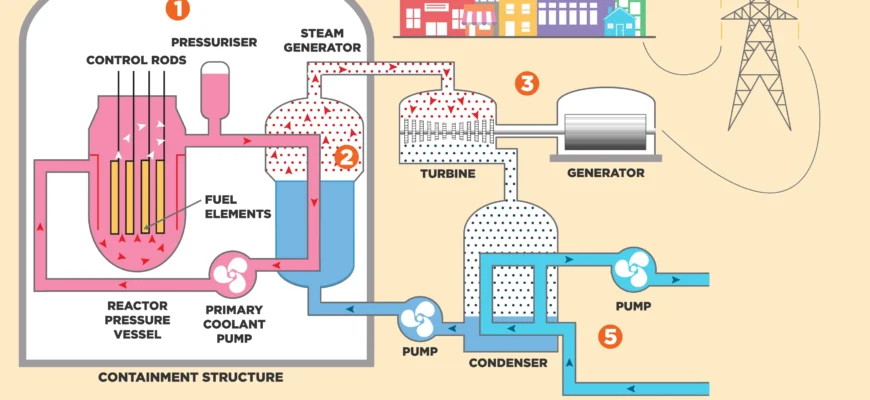
A nuclear power plant employs a series of complex steps to convert nuclear energy into electrical power. Here’s a breakdown of the process:
- Reaction Initiation: Nuclear fission starts in the reactor core, breaking apart the atoms in uranium or plutonium fuel.
- Heat Generation: The fission process releases heat, which is absorbed by the coolant, often water.
- Steam Production: The heated water or coolant turns into steam under high pressure.
- Turbine Rotation: The steam spins turbines connected to generators, producing electricity.
- Condensation: The steam is then cooled and converted back into water, to be reused in the cooling process.
Nuclear reactors also have several safety systems and backups to manage and control the fission reactions and maintain reactor integrity.
Types of Nuclear Reactors
Nuclear reactors come in various designs, each with unique characteristics. The most common types include:
- Pressurized Water Reactors (PWR): The most prevalent type, featuring water under high pressure to prevent it from boiling.
- Boiling Water Reactors (BWR): Produces steam directly in the reactor vessel.
- Fast Breeder Reactors (FBR): Generates more fissile material than they consume, utilizing fast neutrons.
- Graphite-moderated Reactors: Use graphite as a moderator to slow down neutrons.
These reactor types are chosen based on factors such as efficiency, safety protocols, and output requirements.
Advantages of Nuclear Power
Nuclear power offers several benefits that make it a compelling energy source:
- Low Greenhouse Gas Emissions: Apart from the initial setup, nuclear power plants generate minimal fossil fuel emissions compared to fossil-based plants.
- High Energy Density: A small amount of nuclear fuel can produce a large amount of electricity.
- Reliability: Nuclear power plants operate reliably, providing a stable base-load energy source.
- Reduced Air Pollution: Compared to coal, the absence of combustion means fewer pollutants are released into the atmosphere.
Challenges and Risks of Nuclear Power
Despite its benefits, nuclear power has several challenges and risks:
- Radioactive Waste: Safe disposal and management of nuclear waste remains a global challenge.
- High Initial Costs: Building and decommissioning plants demand significant investment.
- Accident Risks: Nuclear accidents, though rare, can have catastrophic consequences, as seen in Chernobyl and Fukushima.
- Resource Limitations: Uranium requires mining and enrichment, which are resource-intensive processes.
Nuclear Power vs. Renewable Energy
With the rise of renewable energy sources, how does nuclear power compare? Here’s a snapshot:
| Aspect | Nuclear Power | Renewable Energy (e.g., Solar, Wind) |
|---|---|---|
| Energy Density | High | Variable |
| Emissions | Low | Minimal |
| Reliability | 24/7 base-load | Weather-dependent |
| Cost | High setup, low ongoing | Declining setup costs |
| Sustainability | Debated | Highly sustainable |
While renewable energy is on the rise, nuclear power remains a key player in bridging energy gaps.
Economic Aspects of Nuclear Power
The economic landscape of nuclear power is both complex and dynamic:
- Capital Investment: High initial capital is required to build nuclear facilities.
- Operating Costs: Lower operating costs compared to fossil-based energy production.
- Job Creation: Supports thousands of jobs during construction and operation.
- Decommissioning: End-of-life decommissioning requires further financial considerations.
Despite high upfront costs, nuclear energy remains economically viable in the long term.
Global Use of Nuclear Power
Nuclear power is utilized worldwide, with diverse global footprints:
- United States: Largest producer of nuclear energy with numerous reactors.
- France: Derives a significant portion of its electricity from nuclear sources.
- China: Rapidly expanding its nuclear program to meet growing energy demands.
- Russia: Major player in nuclear technology and plant exports.
International collaborations and agreements continue to shape the future trajectory of nuclear energy.
Frequently Asked Questions (FAQs)
1. What is nuclear power?
Nuclear power is a form of energy produced through nuclear reactions, primarily nuclear fission, where atomic nuclei are split to release energy.
2. How does a nuclear power plant generate electricity?
A nuclear power plant generates electricity by using nuclear fission to produce heat, which then converts water into steam, turning turbines connected to generators.
3. Is nuclear energy renewable?
Nuclear energy is not considered renewable because it relies on finite fuel sources like uranium. However, it is low-carbon and can complement renewable energy sources.
4. What are the safety measures in nuclear power plants?
Safety measures include multiple containment barriers, automatic shutdown systems, and regular safety drills and inspections to minimize risks of radiation leaks.
5. Can nuclear power help combat climate change?
Nuclear power can help combat climate change by providing a low-carbon alternative to fossil fuels, reducing greenhouse gas emissions when used responsibly.







