- The Meaning of Usurper: An In-Depth Exploration
- Introduction
- Definition of Usurper
- Historical Context of Usurpers
- Modern Context: Usurpers Today
- The Psychological Profile of a Usurper
- What Motivates a Usurper?
- Could Usurping Be Justified? Ethical Considerations
- Usurpers in Pop Culture
- Common Mistakes and Misconceptions about Usurpers
- The Price of Usurping: Consequences and Repercussions
- FAQ Section: Understanding Usurpers
The Meaning of Usurper: An In-Depth Exploration
In the realm of linguistics and power dynamics, the term “usurper” holds significant connotations. This article delves into understanding what a usurper is, exploring its historical roots, implications, and modern-day relevance.
Introduction
The term “usurper” is often used in discussions about power and authority. But what exactly does it mean, and why is it a term that still captivates audiences today? To gain a clear understanding, this article will explore various facets of the term, ranging from its definition to its applications in different contexts.
Definition of Usurper
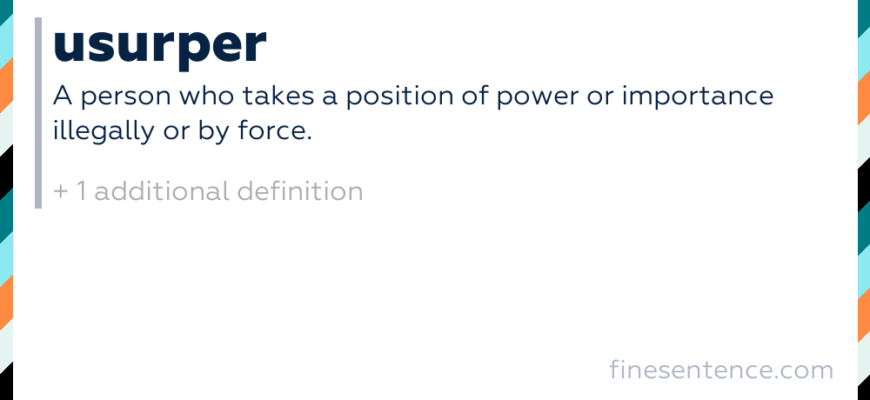
A usurper is generally defined as a person who takes a position of power or importance illegally or by force. The act of usurping involves seizing authority from a rightful holder or entity. This term finds its origins in the Latin word “usurpare,” which means to seize for use. Typically, usurpers are associated with negative connotations, as they disrupt established hierarchies and often employ unethical means to achieve their goals.
Historical Context of Usurpers
Throughout history, numerous figures have been labeled as usurpers. From ancient monarchies to modern political landscapes, the theme of unauthorized power seizure resonates. Historical usurpers often catalyzed significant changes, influencing the political or social currents of their time. Notable examples include Henry IV of England and Napoleon Bonaparte, both of whom challenged established orders to claim leadership. The consequences of usurping authority have varied, with some resulting in stability and others in turmoil.
Modern Context: Usurpers Today
In today’s world, the concept of a usurper goes beyond its medieval associations with thrones and kingdoms. It extends to corporate environments, politics, and even digital spaces. In business, a usurper may be an individual who undermines managerial authority to push their own agenda. In politics, coups and unauthorized election claims frequently evoke the notion of usurpation. As our digital landscape proliferates, cyber usurpers manipulate systems to gain control illegally.
The Psychological Profile of a Usurper
Understanding the mindset of a usurper requires a dive into psychological domains. Usurpers often exhibit traits such as ambition, cunning, and charisma. While motivation can vary, it frequently includes a desire for recognition, control, or a belief in their superiority. Contrarily, these characteristics may also lead to downfall due to overconfidence or miscalculated risks.
What Motivates a Usurper?
The motivations behind usurping power can be complex and multifaceted. Common drivers include a sense of injustice, a belief that they can lead better than the current authority, or sheer opportunism. At times, desperation may push individuals into usurpation as a survival tactic or last resort. Each scenario roots itself in the broader narrative of wanting agency over one’s environment.
Could Usurping Be Justified? Ethical Considerations
The morality of usurping power raises key ethical questions. Can the end justify the means if a usurper claims to have noble intentions? Some historical examples suggest that usurpation brought about necessary change and progress. However, these situations are rare exceptions rather than the norm. The risks of illegality and ethical misconduct often outweigh purported benefits.
Usurpers in Pop Culture
Literature and cinema frequently depict usurpers as intriguing characters. The archetype of someone who disrupts the status quo is a plot driver in countless stories. From Shakespeare’s Macbeth to more recent portrayals in series like “Game of Thrones,” usurpers serve as both antagonists and catalysts for narrative developments. These fictional portrayals ignite public fascination by exploring the moral complexities and human emotions behind usurpation.
Common Mistakes and Misconceptions about Usurpers
Misunderstandings about usurpers commonly arise. One such fallacy is the belief that all usurpers are inherently villainous. While often true, this is an oversimplification. Another misconception is that usurping is often spontaneous. More frequently, usurpers meticulously plan their ascent, waiting for the opportune moment to act. Lastly, mislabeling youthful ambition or strategic ascension as usurpation dilutes the term’s gravity.
The Price of Usurping: Consequences and Repercussions
The act of usurping can come at various costs, affecting both the usurper and the broader environment they aim to control. Consequences include potential legal repercussions, loss of reputation, and in extreme cases, existential threats from loyalists to the deposed authority. Additionally, infrastructure or systemic upheaval often results in substantive social costs.
FAQ Section: Understanding Usurpers
- What is a usurper? A usurper is someone who seizes power, typically in an illegal or unethical manner, challenging or overthrowing an established authority.
- How can usurping impact an organization? Usurping in organizations can lead to power struggles, decreased morale, and destabilization of management structures.
- Are usurpers always negative figures? While traditionally viewed negatively, some usurpers are seen as reformers or revolutionaries, depending on the context and outcome of their actions.
- Is usurping power illegal? Typically, yes, usurping power is considered illegal or against established norms. However, the context can influence this interpretation.
- What motivates someone to become a usurper? Motivations can include personal ambition, perceived injustice, or an ideological belief in their leadership abilities.
| Aspect | Historical Usurpers | Modern Usurpers |
|---|---|---|
| Common Setting | Monarchies or Empires | Corporate or Political Arenas |
| Motivation | Throne or Kingdom | Shareholder Influence or Election |
| Methods | Military Force | Manipulative Strategy |
| Consequences | Wars or Revolts | Legal Battles or PR Crises |







