Replace tires when the tread is worn to 2/32 of an inch, or after 6 to 10 years regardless of tread. Most tires reach that point between 25,000 and 50,000 miles.
Check tread depth
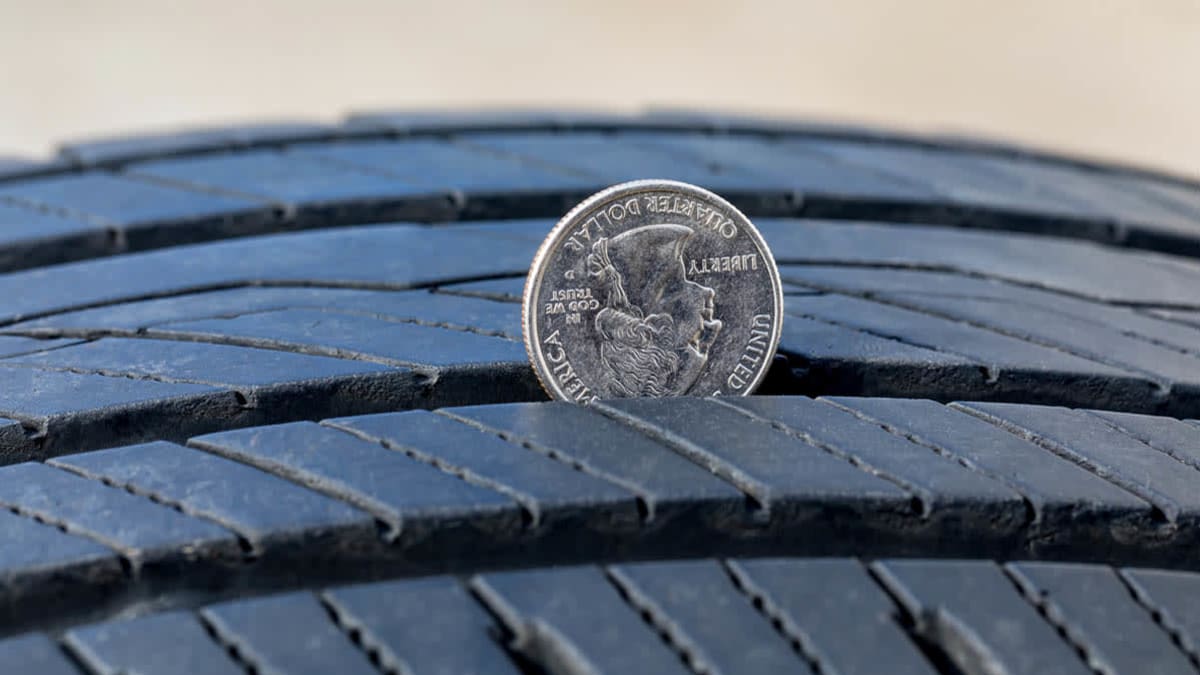
Insert a penny into a groove with Lincoln’s head pointing down. If you can see all of his head, the tread is at or below 2/32 inch, the legal minimum in most US states, and the tire must be replaced. A quarter with Washington’s head works the same way for 4/32 inch, the depth where wet braking already gets noticeably worse, so many experts suggest replacing before then. New passenger tires typically start at 10/32 to 11/32 inch.
Check tire age
Find the DOT code on the sidewall. The last four digits show the week and year of manufacture, for example 2321 means the 23rd week of 2021. Rubber ages even when the tire is unused because of heat, sunlight, and ozone. Several automakers advise replacement at 6 years, and 10 years is widely treated as the upper limit.
Typical lifespan by tire type
- All-season touring tires: about 50,000 to 70,000 miles.
- Performance tires: about 20,000 to 40,000 miles.
- Winter tires: about 3 to 4 seasons, and they lose grip as the rubber hardens.
- Light truck and all-terrain tires: about 40,000 to 60,000 miles.
Other signs to replace
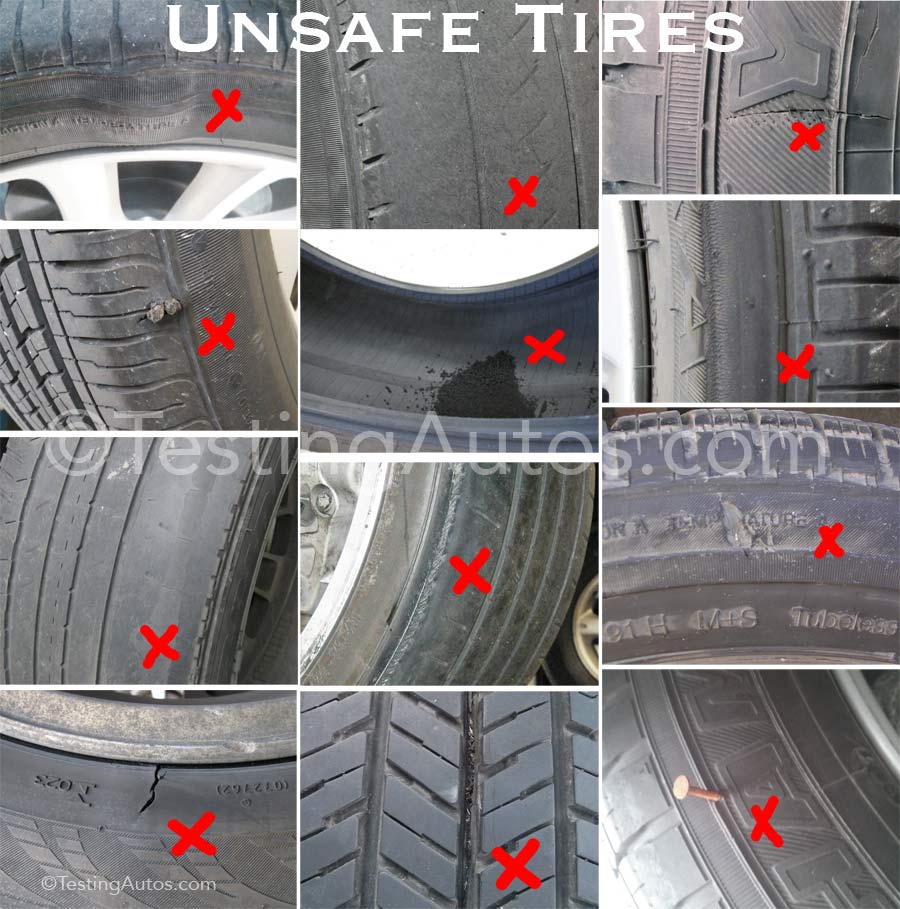
- Cracks, bulges, or cuts in the sidewall.
- Tread wear bars flush with the tread across the groove.
- Repeated pressure loss or a vibration that balancing does not fix.
- A nail or puncture in the shoulder or sidewall, which cannot be safely repaired.
Can a tire be repaired?
A puncture in the central tread, up to about 1/4 inch, can usually be repaired from the inside with a patch and plug. Repairs in the sidewall or shoulder are not considered safe.
Make tires last longer
Check air pressure monthly against the door-jamb placard, not the number on the tire. Underinflation increases heat and wear. Rotate every 5,000 to 7,500 miles to even out wear, and keep the alignment correct. Tread warranties commonly range from 40,000 to 80,000 miles, but they do not cover damage or misuse.

Replace in pairs or sets
If you replace only two, put the new tires on the rear axle for better stability in wet conditions. On all-wheel-drive vehicles, mismatched tread depth can strain the drivetrain, so replace all four or follow the maker’s limits.
Based on data from NHTSA tire safety guidance, the Tire Industry Association, and vehicle owner manuals.