Understanding 20/20 Vision: The Ultimate Guide
When it comes to eye health, you’ve likely heard the term “20/20 vision” thrown around, but what does it truly mean? In simple terms, it’s a measurement of visual acuity, which refers to the clarity or sharpness of vision. Perfect eyesight is often associated with having 20/20 vision, yet there’s more to it than meets the eye. This comprehensive guide aims to dissect the meaning of 20/20 vision, answer your burning questions, and provide insightful information from authoritative sources to enhance your understanding of this fascinating topic.
What Does 20/20 Vision Mean?
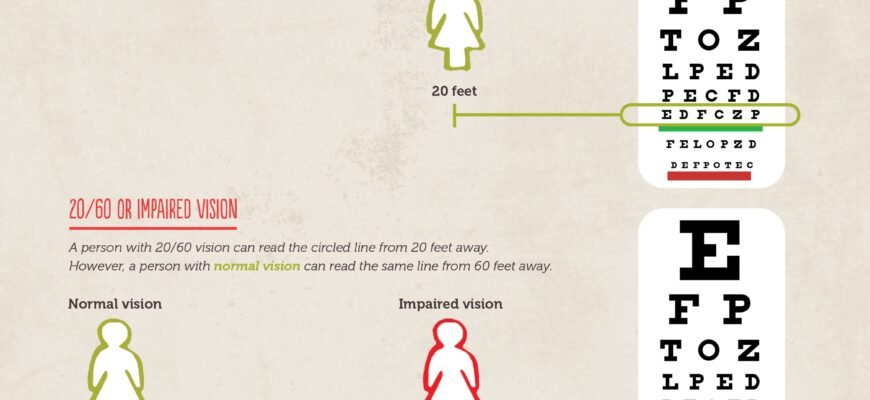
20/20 vision is a term used to express normal visual acuity measured at a distance of 20 feet. If you have 20/20 vision, you can see clearly at 20 feet what should normally be visible at that distance. It is important to note that 20/20 does not equate to perfect vision. Other factors affect overall eye health, such as peripheral awareness, eye coordination, depth perception, focusing ability, and color vision. All these aspects contribute to how we navigate our daily environment.
How Is 20/20 Vision Measured?
Vision is measured using the Snellen chart, a tool named after Dutch ophthalmologist Herman Snellen. The chart consists of 11 rows of capital letters becoming progressively smaller toward the bottom. During an eye exam, you’ll be asked to read the letters, starting from the top row. Each row corresponds to a level of visual acuity. Your ability to correctly identify the letters indicates how clear and sharp your vision is. To achieve 20/20, you must read a specific row correctly, which the average person can see at 20 feet.
Is 20/20 Vision Perfect?
While 20/20 vision is often referred to as “perfect,” it’s not necessarily the pinnacle of eye health. People can have better than 20/20 vision, such as 20/15 or 20/10 vision, where they can see at 20 feet what the average person can see at 15 or 10 feet. Additionally, 20/20 doesn’t account for other critical parts of vision, like color distinction or depth perception. Comprehensive eye exams can provide a more complete picture of your visual capabilities and overall eye health.
How to Achieve 20/20 Vision Naturally
- Regular Eye Exams: A critical step in maintaining eye health is regular check-ups with an eye care professional, ensuring early detection of potential problems.
- Healthy Diet: Consume foods rich in omega-3 fatty acids and vitamins, such as leafy greens, fish, and nuts, to support eye health.
- Protective Eyewear: Use sunglasses or protective gear to shield eyes from harsh sunlight and potential physical damage.
- Frequent Breaks: Follow the 20-20-20 rule for screen usage: every 20 minutes, look at something 20 feet away for 20 seconds.
- Consistent Exercise: Physical activity improves blood circulation, which benefits vision by increasing the flow of oxygen to the eyes.
Corrective Measures for 20/20 Vision
Achieving 20/20 vision can be supported with corrective lenses or surgery. Glasses and contact lenses are the most common solutions, designed to compensate for refractive errors such as myopia or hyperopia. Laser surgeries like LASIK are options for permanent correction, reshaping the cornea to improve focus and clarity of vision. Always consult a professional before embarking on corrective measures, as suitability varies based on individual eye health.
Cost of Achieving 20/20 Vision
The cost associated with achieving or maintaining 20/20 vision varies widely. Routine eye exams range from $50 to $250, depending on the clinic and location. Glasses and contact lenses can cost anywhere from $100 to $1000 annually, considering updated prescriptions and durable frames or top-quality lenses. Laser eye surgery costs are usually higher, ranging from $2000 to $4000 per eye, not typically covered by insurance plans. Evaluating the costs involves considering lifelong eye health and the benefits of maintaining optimal vision.
Common Mistakes About 20/20 Vision
- Assuming It’s Perfect: 20/20 is normal, but not perfect. It’s a baseline measurement for vision clarity at a standard distance.
- Overlooking Other Aspects: Visual acuity isn’t the only factor in good eye health. Depth perception, eye movement, and coordination also matter.
- Neglecting Regular Check-Ups: Regular eye exams are crucial for detecting potential vision problems early on, which can prevent long-term damage.
FAQ Section
- What does 20/20 vision mean? 20/20 vision means you can see clearly at 20 feet what should normally be visible at that distance, indicating normal vision clarity.
- Can someone see better than 20/20 vision? Yes, some people see better than 20/20, such as 20/15 or 20/10 vision, where they can see at 20 feet what others see worse than that.
- How can I maintain 20/20 vision? Regular eye exams, a healthy diet, protective eyewear, regular exercise, and limiting screen time can help maintain 20/20 vision.
- Is 20/20 vision the same as perfect vision? No, 20/20 vision is normal, not perfect. It doesn’t account for other aspects of eye health like color detection or depth perception.
- What factors can affect 20/20 vision? Age, genetic predisposition, lifestyle choices, underlying medical conditions, and environmental exposure can impact vision quality.