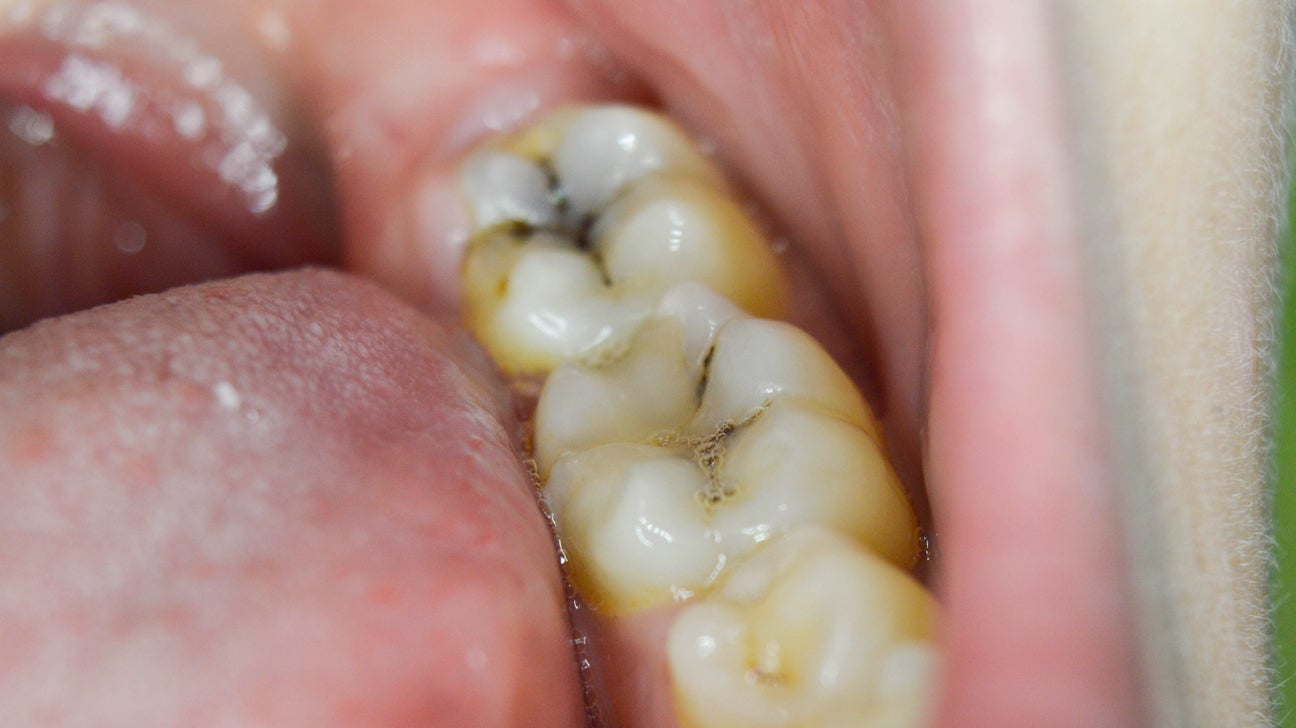
Early cavities look like white, chalky spots on a tooth, while advanced ones appear as brown or black spots, pits, or visible holes. Not every cavity is visible, so a dentist exam and X-rays are the reliable way to confirm.
Stages of tooth decay
- Early demineralization: a white, chalky spot on the enamel, often near the gum line. It can still reverse with fluoride.
- Enamel cavity: a light brown spot or small pit that catches on a dental probe.
- Dentin decay: dark brown or black areas and sensitivity to sweets, cold, or heat. Decay spreads faster once it passes the enamel.
- Pulp involvement: a visible hole, throbbing pain, and sometimes swelling or a gum pimple that signals an abscess.
Where cavities hide
Between teeth and under old fillings, cavities often show up only on dental X-rays. Bitewing X-rays are the usual way dentists find them early.

What to do

Small cavities are treated with a filling. Deeper ones may need a crown or a root canal. Brushing twice a day with fluoride toothpaste, cleaning between teeth daily, and limiting sugary snacks lower the risk. The American Dental Association recommends a dental exam at least once a year, or as often as your dentist advises.
Based on data from the American Dental Association and the National Institute of Dental and Craniofacial Research.