- Understanding the Meaning of a Rainbow: A Comprehensive Guide
- The Science Behind Rainbows: How They Form
- Cultural and Symbolic Significance of Rainbows
- The Rainbow Flag: A Symbol of Pride and Diversity
- Rainbows in Art and Literature
- Frequently Asked Questions about Rainbows
- What Colors Are in a Rainbow?
- Can a Rainbow Appear at Night?
- Is It Possible to Touch a Rainbow?
- Why Are Rainbows Circular?
- Which Shape Is Better for Observing a Rainbow, a Sphere or a Prism?
- Rainbows: A Global Phenomenon and Personal Reflection
- Common Mistakes in Understanding Rainbows
- Conclusion: Unveiling the Mystery of Rainbows
Understanding the Meaning of a Rainbow: A Comprehensive Guide
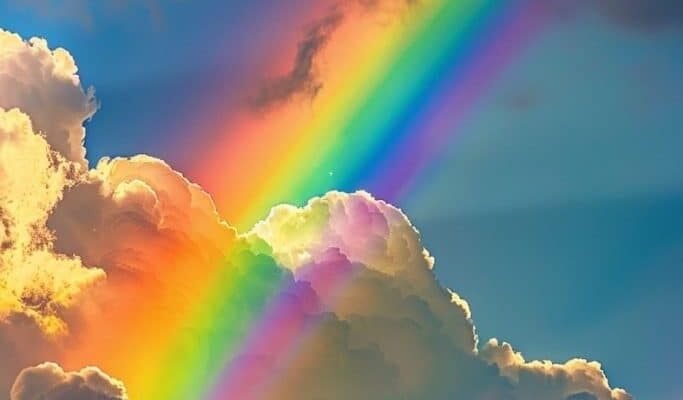
Rainbows have fascinated humanity for millennia, appearing in art, literature, and mythology across cultures. But beyond their aesthetic appeal, a rainbow holds a deeper significance scientifically, culturally, and metaphorically. This guide delves into the multifaceted meaning of rainbows, providing insights into their formation, symbolism, and their role in various traditions. Whether you’re curious about the science of light refraction or the rainbow’s emblematic importance in LGBTQ+ movements, this article aims to illuminate all aspects of this natural wonder.
The Science Behind Rainbows: How They Form
Understanding the formation of rainbows requires a basic knowledge of light physics. A rainbow is an optical phenomenon that occurs when sunlight is refracted, dispersed, and reflected off water droplets in the atmosphere. When light passes through these droplets, it bends and separates into various colors: red, orange, yellow, green, blue, indigo, and violet.
- Refraction: Light enters a water droplet, slowing down and bending at the droplet-air interface.
- Dispersion: As light bends, it splits into its constituent colors based on wavelength.
- Reflection: The light reflects off the inside surface of the droplet.
- Second Refraction: It exits the droplet, bending again, which enhances the separation of colors and forms a circular arc.
Cultural and Symbolic Significance of Rainbows
Rainbows have inspired various interpretations across different cultures. They often symbolize hope, promise, and new beginnings, commonly associated with spiritual lore and mythological events.
- Judeo-Christian Beliefs: The rainbow is considered a symbol of God’s promise to Noah, representing a covenant between the divine and humanity.
- Norse Mythology: Known as Bifröst, a rainbow served as a bridge between realms.
- Native American Culture: Rainbows are respected as sacred, representing spirits and ancestors.
The Rainbow Flag: A Symbol of Pride and Diversity
In modern times, the rainbow has become synonymous with the LGBTQ+ community, symbolizing diversity and pride. The rainbow flag was first designed by Gilbert Baker in 1978, each color representing different aspects of life and culture:
- Red: Life
- Orange: Healing
- Yellow: Sunshine
- Green: Nature
- Blue: Harmony
- Violet: Spirit
Rainbows in Art and Literature
Rainbows have consistently appeared in art and literature, serving as a metaphor for hope and transformation. From poetry to paintings, rainbows encapsulate the human experience’s complexity and beauty. Artists like Joseph Turner and writers such as William Wordsworth have long used rainbows to convey emotion and depth.
Frequently Asked Questions about Rainbows
What Colors Are in a Rainbow?
The colors of the rainbow in order are red, orange, yellow, green, blue, indigo, and violet.
Can a Rainbow Appear at Night?
Yes, it’s known as a “moonbow,” a rare phenomenon where moonlight, rather than sunlight, forms a rainbow. These are usually fainter due to the limited light source at night.
Is It Possible to Touch a Rainbow?
No, a rainbow is an optical illusion with no physical location. It’s the result of light refraction and dispersion, so it can’t be physically touched.
Why Are Rainbows Circular?
Rainbows appear circular because they form from light that strikes water droplets and refracts in a spherical pattern. The ground usually obscures the bottom half, making them appear as arcs.
Which Shape Is Better for Observing a Rainbow, a Sphere or a Prism?
Both spheres and prisms can display the dispersion of light into a spectrum, but spheres (like raindrops) naturally form rainbows in the sky thanks to their rounded shape refracting light uniformly.
Rainbows: A Global Phenomenon and Personal Reflection
Rainbows transcend geographical boundaries, appearing worldwide and carrying unique meanings. They inspire awe, creativity, and hope, often reminding us of the beauty in life’s fleeting moments. Whether viewed as a bridge, a promise, or a spectrum of human diversity, rainbows hold a universal fascination.
Common Mistakes in Understanding Rainbows
The interpretation of rainbows can sometimes be marred by misconceptions. Common mistakes include thinking they only occur in rain or that each color represents a range rather than distinct bands. Dissecting these myths enhances our appreciation and understanding of this awe-inspiring natural event.
Conclusion: Unveiling the Mystery of Rainbows
Ultimately, the meaning of rainbows intertwines natural science with cultural symbolism, rendering them more than simple optical features. By embracing both their scientific intricacies and cultural narratives, we gain a comprehensive appreciation for rainbows and their role in our world.







