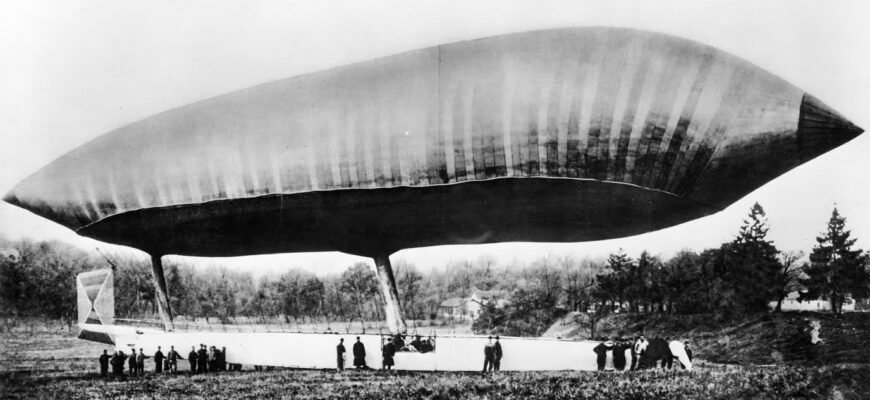
Introduction to Dirigibles
Dirigibles, synonymous with “airships,” are fascinating lighter-than-air craft that use buoyant gas to remain aloft. With roots in the late 19th and early 20th centuries, these majestic machines have evolved significantly over the years, playing crucial roles in various fields from transportation to advertising. Understanding the meaning and functionality of dirigibles, including their history, current uses, and future potential, provides a comprehensive view of this unique mode of air travel.
What Are Dirigibles?
A dirigible is an airship that can be steered and propelled through the air. The term “dirigible” originates from the French word “diriger,” meaning “to direct.” These aircraft are typically filled with a gas lighter than air, like helium or hydrogen, to achieve buoyancy. Dirigibles differ from balloons in that they can be piloted and controlled, making them versatile for diverse applications.
The History of Dirigibles
Dirigibles emerged in the late 1800s, with pioneers like Ferdinand von Zeppelin advancing airship technology. These early airships, known as Zeppelins, made significant strides in air travel, offering a glamorous and novel way to traverse distant lands. The history of dirigibles is marked by both triumph and tragedy, most notably the Hindenburg disaster of 1937, which drastically impacted their public perception.
Types of Dirigibles
- Non-rigid airships: Also called blimps, they have no internal structure and rely on gas pressure to maintain shape.
- Semi-rigid airships: Feature a partial keel or frame supporting the gas envelope.
- Rigid airships: Have a full framework that maintains the airship’s form, allowing for larger constructions.
How Do Dirigibles Work?
Dirigibles function based on the principles of buoyancy and propulsion. The lighter-than-air gas provides lift, while engines and rudders allow for propulsion and maneuverability. The balance between buoyancy and weight dictates the dirigible’s ability to ascend, hover, or descend.
Applications of Dirigibles Today
In modern times, dirigibles find applications in areas such as:
- Advertising: Blimps are famous for carrying logos and messages over large events.
- Surveillance: Governments use airships for border patrol and other monitoring purposes due to their stable hovering capabilities.
- Transport: Emerging technologies aim to utilize dirigibles for cargo transport, particularly in remote or ecologically sensitive areas.
Which Is Better: Dirigibles or Conventional Aircraft?
Dirigibles offer unique advantages over conventional aircraft: they can hover for long periods, provide a smooth ride, and have minimal environmental impact. However, airplanes are faster and more efficient over long distances. The choice often depends on the specific needs and logistical considerations of a mission.
Common Mistakes When Understanding Dirigibles
- Confusing dirigibles with hot air balloons, which are not steerable.
- Misleading assumptions about safety due to historical incidents like the Hindenburg disaster without considering modern safety advancements.
Future of Dirigibles: Is It Possible?
The future of dirigibles looks promising with advancements in technology. Innovations in materials and engines are paving the way for more efficient and eco-friendly airships, sparking renewed interest in their potential to transform air logistics and travel.
FAQ
- What is a dirigible? A dirigible, or airship, is a steerable craft that floats in the air using buoyant gas. Unlike balloons, they can navigate through the air with onboard engines and steering mechanisms.
- How do dirigibles work? Dirigibles work by using a lighter-than-air gas to provide lift. Engines and rudders enable them to move forward, turn, and hover steadily in the air.
- Which is better: dirigibles or airplanes? Dirigibles are better for operations requiring aerial stability and low environmental impact, while airplanes are more suited for fast, long-distance travel.
- Can dirigibles be used for transport today? Yes, dirigibles are being explored for use in niche markets like cargo transport in remote areas, benefiting from recent technological advancements.
- What are common mistakes in understanding dirigibles? Common mistakes include confusing them with non-steerable balloons and overlooking safety improvements since early airship disasters.
json-ld