- Understanding Compound Interest: How Does It Work?
- What Is Compound Interest?
- How Does Compound Interest Work?
- Benefits of Compound Interest: Why It Matters
- Compound Interest vs. Simple Interest: Which Is Better?
- Is It Possible to Maximize Earnings with Compound Interest?
- Common Mistakes to Avoid with Compound Interest
- How To Calculate Compound Interest Manually
- FAQ: Answering Your Compound Interest Questions
Understanding Compound Interest: How Does It Work?
Compound interest is a financial concept that has a profound impact on investing and saving. Its power is often underappreciated, yet understanding its mechanisms can significantly enhance your financial literacy and decision-making. In this comprehensive guide, we’ll explore how compound interest works, the advantages it offers, and how you can leverage it to maximize your returns.
What Is Compound Interest?
Compound interest is the interest on a loan or deposit that accrues on both the initial principal and the accumulated interest from previous periods. Unlike simple interest, which is calculated solely on the principal amount, compound interest builds more value over time. This “interest on interest” effect makes compound interest a powerful tool for growing wealth.
How Does Compound Interest Work?
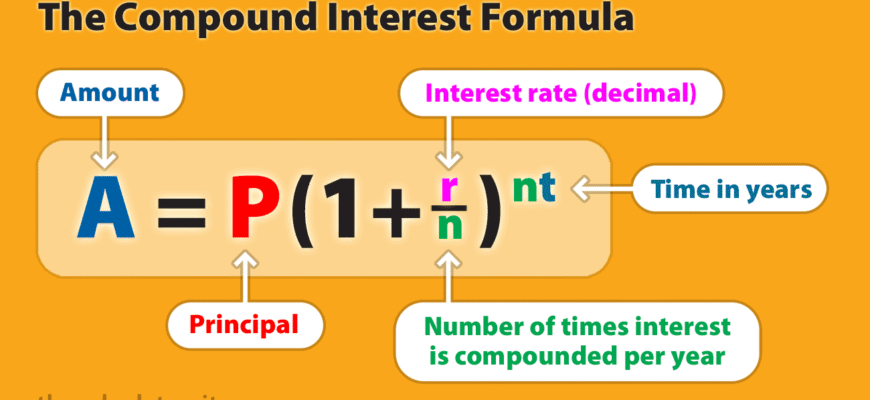
The formula for compound interest is:
- A = P(1 + r/n)^(nt)
- A: the amount of money accumulated after n years, including interest.
- P: the principal amount (initial investment).
- r: annual interest rate (decimal).
- n: number of times the interest is compounded per year.
- t: the number of years the money is invested for.
Through repeated application of the formula, the principal grows exponentially, demonstrating the effect of compounding interest.
Benefits of Compound Interest: Why It Matters
- Increased Returns: The “interest on interest” effect can lead to substantial growth in your savings or investments over time.
- Encourages Long-term Investment: The benefits of compounding become more pronounced with longer investment horizons.
- Inflation Hedge: Compound interest can help mitigate the impacts of inflation by growing your savings at a rate that outpaces price increases.
Compound Interest vs. Simple Interest: Which Is Better?
While both compound and simple interest calculate return, compound interest provides a higher yield over time. Simple interest, calculated as a fixed percentage of the principal only, lacks the exponential growth achieved with compound interest.
| Aspect | Compound Interest | Simple Interest |
|---|---|---|
| Calculation Basis | Principal + Accumulated Interest | Principal Only |
| Growth | Exponential | Linear |
| Best for | Long-term Investing | Short-term Financing |
Is It Possible to Maximize Earnings with Compound Interest?
Yes, strategic approaches can enhance the effectiveness of compound interest. Consider these tips:
- Start Early: The earlier you start investing or saving, the more time compound interest has to grow your wealth.
- Consistent Contributions: Regular additions to your principal can vastly improve outcomes.
- Reinvest Returns: Reinvest dividends and interest to leverage compounding fully.
Common Mistakes to Avoid with Compound Interest
Avoid these pitfalls to make the most of compound interest:
- Ignoring Fees: Fees can erode your returns, negating some advantages of compounding.
- High-Interest Debt: Just as compound interest grows investments, it can also inflate debt. Pay off high-interest debt to avoid financial pitfalls.
- Lack of Diversification: Over-reliance on a single type of asset can reduce potential returns.
How To Calculate Compound Interest Manually
While financial tools exist to ease the process, manual calculation helps understand the fundamental principles. Using the compound interest formula:
- Determine your values for P, r, n, and t.
- Substitute and solve using A = P(1 + r/n)^(nt).
Manual calculations reinforce the importance of each component in the growth of an investment.
FAQ: Answering Your Compound Interest Questions
- What is the main benefit of compound interest?
The main benefit is its ability to exponentially grow investments over time through the “interest on interest” effect.
- How often should interest be compounded for the best results?
The more frequently interest is compounded, the better the results, with daily compounding being the optimal choice.
- Can compound interest work against you?
Yes, it can inflate debt if you have high-interest loans or credit card balances, leading to larger amounts owed over time.
- Is compound interest suitable for short-term investments?
While it can be beneficial, compound interest is most advantageous for long-term investments due to its growth potential over time.
- What common mistakes do people make with compound interest?
Common mistakes include neglecting to account for fees, failing to reinvest returns, and accumulating high-interest debt.