- Introduction to Scalability: Definition and Importance
- What Is Scalability?
- Types of Scalability
- Why Is Scalability Important?
- Scalability in Technology: Key Considerations
- How to Achieve Scalability
- Scalability in Business: A Strategic Edge
- Scalability Challenges and Mistakes to Avoid
- Is It Possible to Scale Everything?
- Scalability Prices and Budgeting
- FAQs About Scalability
Introduction to Scalability: Definition and Importance
Scalability is a concept that plays a pivotal role in the realms of technology, business, and economics. As businesses strive to cope with ever-changing demands and rapid growth, understanding the meaning of scalability becomes essential. This article delves into various aspects of scalability, exploring its definitions, applications, and best practices to ensure that you can leverage its benefits to the fullest. The primary aim here is to provide a comprehensive guide that answers all your questions about scalability, ranging from what it is to how to implement it effectively.
What Is Scalability?
Scalability refers to the capability of a system, network, or process to handle a growing amount of work or its potential to accommodate growth. In essence, it is the system’s ability to expand and perform under increased load. This term is often used in the context of business operations, computer systems, and networks. The goal of scalability is to maintain or improve performance levels as demand increases without requiring a complete redesign.
Types of Scalability
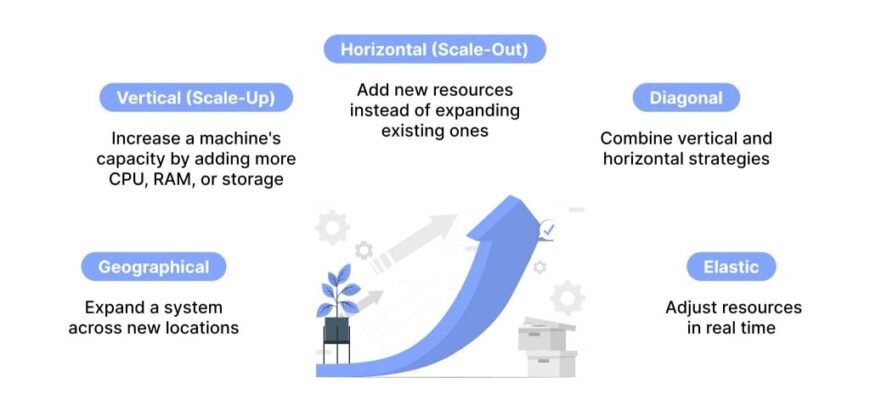
There are primarily three types of scalability: vertical, horizontal, and diagonal. Each type has its advantages and should be chosen based on the specific needs of the system or organization.
- Vertical Scalability: Also known as “scaling up,” this approach involves adding more power to existing hardware or software. This could mean upgrading a server’s CPU, RAM, or storage.
- Horizontal Scalability: Known as “scaling out,” it involves adding more machines or systems to spread the workload more evenly. This method is often preferred for cloud computing.
- Diagonal Scalability: Combines both vertical and horizontal scaling, offering flexibility by upgrading existing systems and adding more units as needed.
Why Is Scalability Important?
Scalability is crucial for businesses and IT systems as it affects performance, cost efficiency, and user satisfaction. A scalable system can adapt to changes and growth without significant tweaks or increased costs, which is vital for businesses experiencing rapid growth or unpredictable demand spikes.
Scalability in Technology: Key Considerations
In technology, scalability involves software, hardware, and network considerations. Ensuring that applications can scale efficiently is essential for maintaining functionality as user demand grows. Key considerations include:
- Load balancing and resource distribution
- Application performance and responsiveness
- Cost management and budgeting
How to Achieve Scalability
Achieving scalability involves planning and implementing strategies that allow systems to grow seamlessly. Here are some best practices:
- Optimization: Regularly optimize code and processes to improve efficiency.
- Distributed Systems: Implement distributed systems for better resource management and load distribution.
- Cloud Solutions: Use cloud services to offer scalability through easy resource allocation.
- Monitoring Tools: Use monitoring and analytics tools to track performance and scalability.
Scalability in Business: A Strategic Edge
In business, scalability provides the ability to increase products, services, and customer base without incurring significant costs or losing quality. For business scalability, consider:
- Adapting the business model to include flexible production and delivery methods.
- Investing in scalable infrastructure.
- Leveraging technology and automation to streamline operations.
Scalability Challenges and Mistakes to Avoid
Common challenges in achieving scalability include costs, technical hurdles, and the risk of overextending resources. Avoid these mistakes:
- Neglecting to test scalability during the initial development phases.
- Failing to invest in adequate technology and infrastructure.
- Overlooking the importance of scalability planning and strategy.
Is It Possible to Scale Everything?
While many systems and processes can be scaled, some may face limitations due to inherent constraints. Factors such as cost, technology advancement, and operational limitations may prevent certain aspects from being scalable.
Scalability Prices and Budgeting
Costs associated with scalability vary widely depending on the nature of what’s being scaled and the strategies employed. Businesses should plan carefully to account for expenses related to infrastructure upgrades, additional resources, and software solutions.
FAQs About Scalability
- What does scalability mean in business? Scalability in business refers to the company’s ability to grow and manage increased demand without compromising performance or losing revenue.
- Which is better: vertical or horizontal scalability? The choice depends on specific business needs: vertical scalability is suitable for systems requiring powerful computation, while horizontal is ideal for distributed loads.
- How do you measure scalability? Scalability is measured through performance metrics such as response time, throughput, resource utilization, and cost efficiency as load increases.
- Can all systems be scaled? Not all systems can achieve perfect scalability due to inherent limitations in design, cost, or technology constraints.
- What are common scalability mistakes? Common mistakes include inadequate testing, poor planning, and insufficient resource investment.







